
Daniel Ackerman | MIT News Office
Despite years of hype, virtual reality headsets have yet to topple TV or computer screens as the go-to devices for video viewing. The solution for better 3D visualization could lie in a 60-year-old technology remade for the digital world: holograms. Holograms deliver an exceptional representation of 3D world around us, offer a shifting perspective based on the viewer’s position, and they allow the eye to adjust focal depth to alternately focus on foreground and background. Researchers have long sought to make computer-generated holograms, but the process has traditionally required a supercomputer to churn through physics simulations, which is time-consuming and can yield less-than-photorealistic results. Now, MIT researchers have developed a new way to produce holograms almost instantly — and the deep learning-based method is so efficient that it can run on a laptop in the blink of an eye.
Complete article from MIT News.
Explore
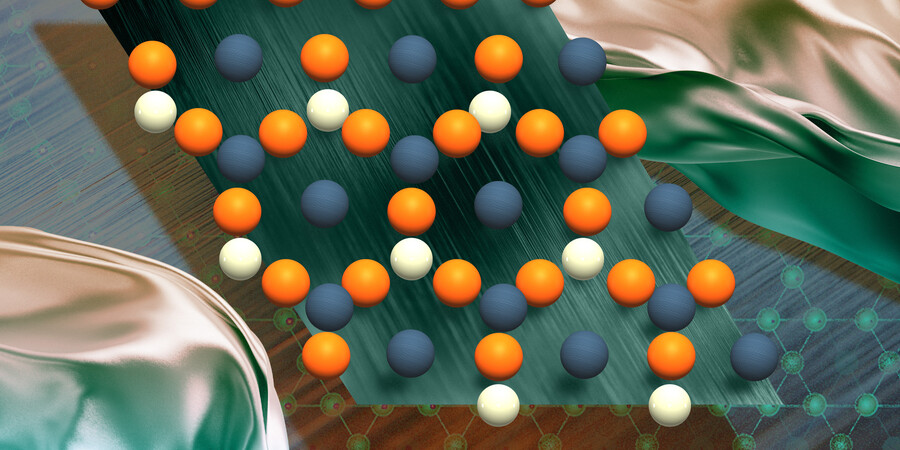
New Tool Makes Generative AI Models More Likely to Create Breakthrough Materials
Zach Winn | MIT News
With SCIGEN, researchers can steer AI models to create materials with exotic properties for applications like quantum computing.
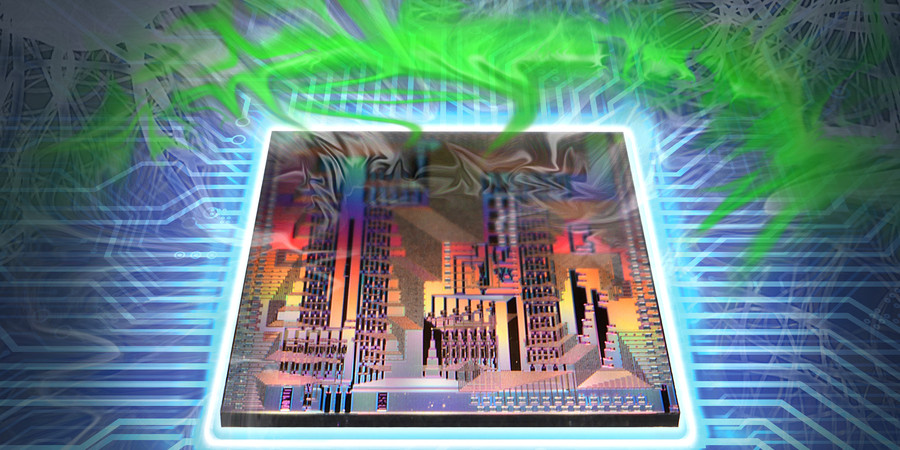
Photonic Processor Could Enable Ultrafast AI Computations with Extreme Energy Efficiency
Adam Zewe | MIT News
This new device uses light to perform the key operations of a deep neural network on a chip, opening the door to high-speed processors that can learn in real-time.
AI Method Radically Speeds Predictions of Materials’ Thermal Properties
Adam Zewe | MIT News
The approach could help engineers design more efficient energy-conversion systems and faster microelectronic devices, reducing waste heat.