
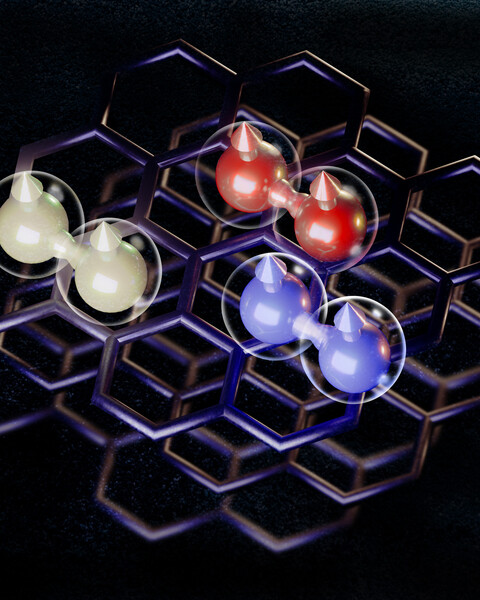
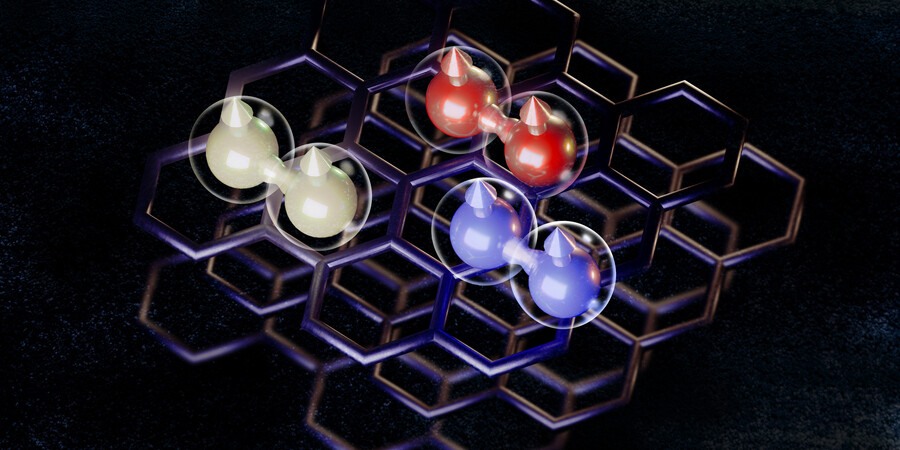
Graphene can hold multiple states of superconductivity, a new study finds
Jennifer Chu | MIT News
What’s more, the superconducting states get stronger under conditions expected to kill them.

Improving the reliability of circuits for quantum computers
Adam Zewe | MIT News
A new technique helps scientists measure a phenomenon that can cause quantum circuits to perform differently than expected, increasing the error in computations.
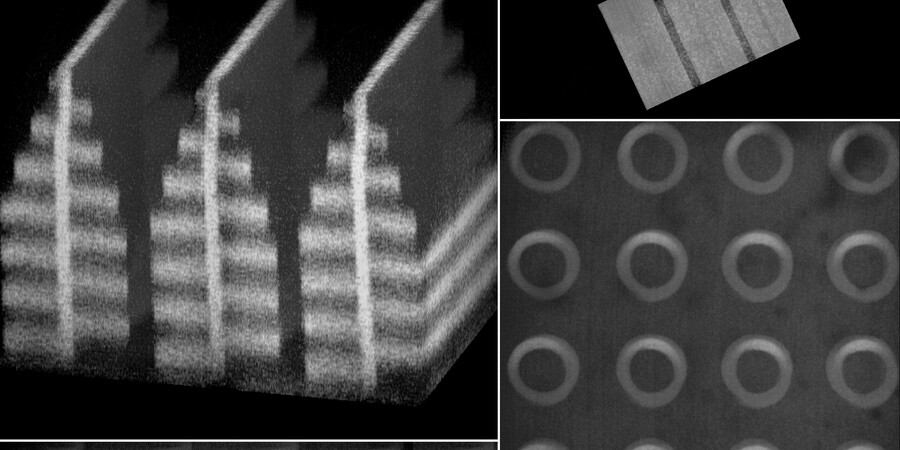
Powerful shrinking technique could enable devices that compute with light
Anne Trafton | MIT News
MIT researchers created tiny 3D photonic devices with features small enough to channel visible light.
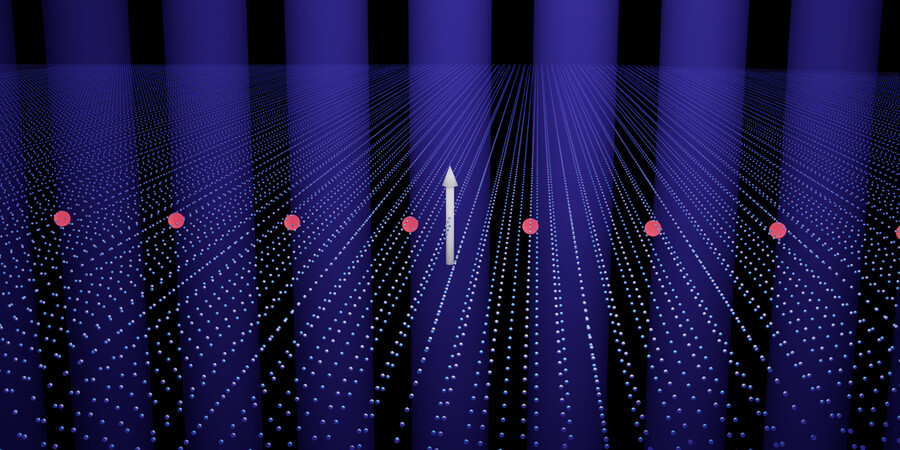
Electrons in Moiré Crystals Explore Higher-dimensional Quantum Worlds
Department of Physics
MIT physicists have discovered 3D “moiré crystals” that simulate four-dimensional quantum materials to a T.
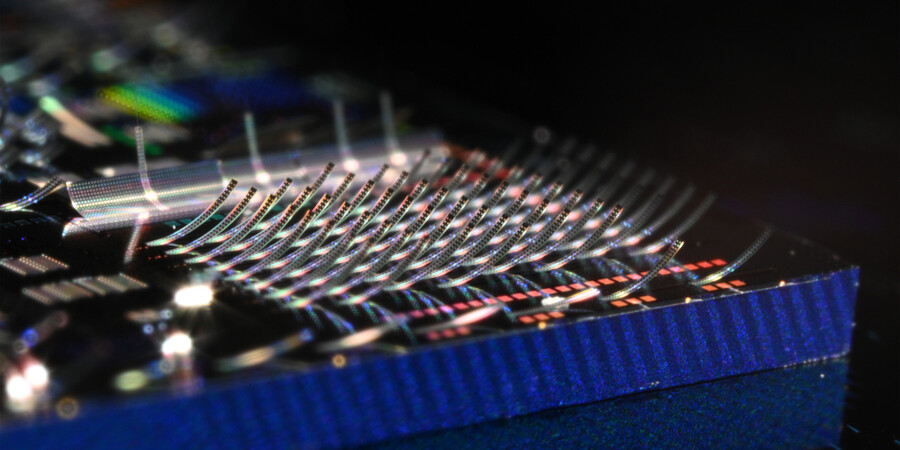
New Photonic Device Efficiently Beams Light into Free Space
Adam Zewe | MIT News
Light-emitting structures that curl off the chip surface could enable advanced displays, high-speed optical communications, and larger-scale quantum computers.
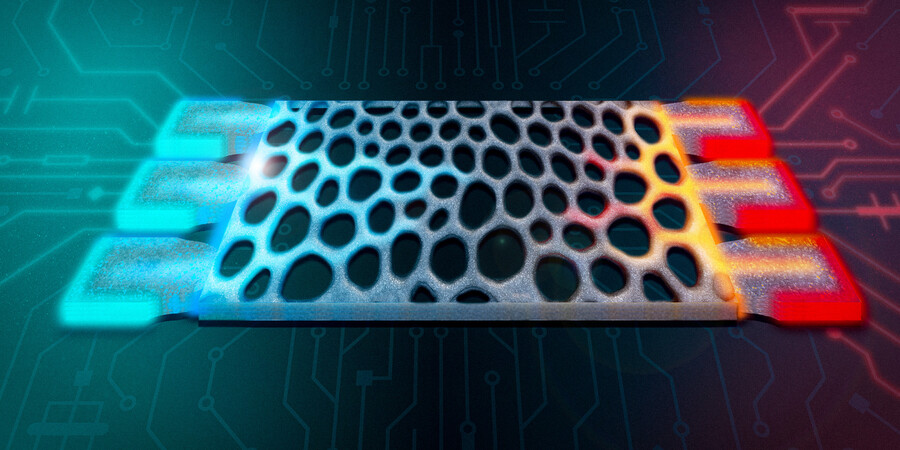
MIT Engineers Design Structures that Compute with Heat
Adam Zewe | MIT News
By leveraging excess heat instead of electricity, microscopic silicon structures could enable more energy-efficient thermal sensing and signal processing.

Efficient cooling method could enable chip-based trapped-ion quantum computers
Adam Zewe | MIT News
New technique could improve the scalability of trapped-ion quantum computers, an essential step toward making them practically useful.

What Makes a Good Proton Conductor?
Zach Winn | MIT News
MIT researchers found a way to predict how efficiently materials can transport protons in clean energy devices and other advanced technologies.

MIDDAS: Memory Integration and Data Dis-Aggregation
Wednesday, November 19, 2025 | 12:00 - 1:00pm ET
Hybrid
Zoom & MIT Campus
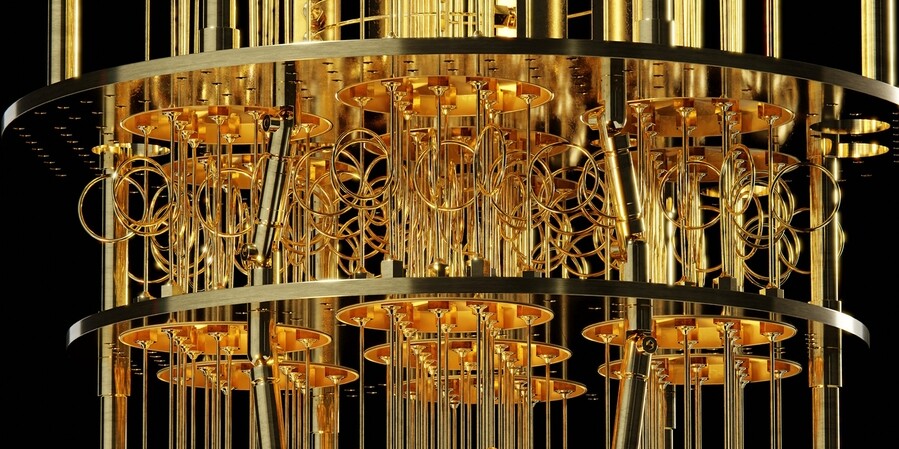
Closing in on Superconducting Semiconductors
Julianna Mullen | Plasma Science and Fusion Center
Plasma Science and Fusion Center researchers created a superconducting circuit that could one day replace semiconductor components in quantum and high-performance computing systems.