

Explore

MIT researchers advance toward greater bandwidth, more energy-efficient communications
Elizabeth A. Thomson | Materials Research Laboratory
The FUTUR-IC research program integrates electronics and photonics in microchip systems.

Discovering the Joy of Future-forward Electrical Engineering
Jane Halpern | Department of Electrical Engineering and Computer Science
One year in, MIT’s hands-on 6-5 (Electrical Engineering With Computing) degree program is already one of the most popular majors among first-year students.
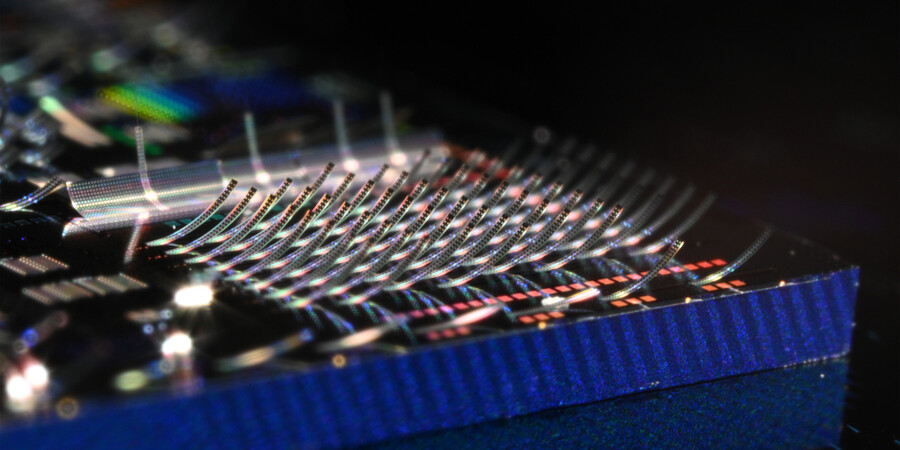
New Photonic Device Efficiently Beams Light into Free Space
Adam Zewe | MIT News
Light-emitting structures that curl off the chip surface could enable advanced displays, high-speed optical communications, and larger-scale quantum computers.