

Adam Zewe | MIT News Office
February 18, 2022
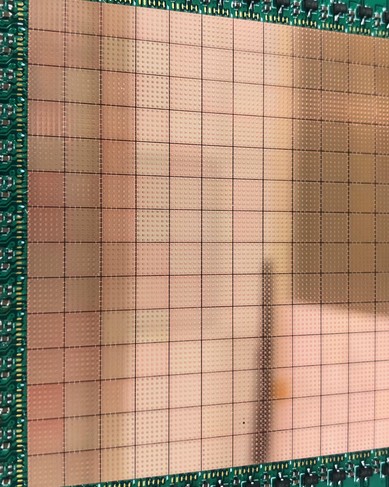
Researchers have created a device that enables them to electronically steer and focus a beam of terahertz electromagnetic energy with extreme precision. This opens the door to high-resolution, real-time imaging devices that are hundredths the size of other radar systems and more robust than other optical systems.
Terahertz waves, located on the electromagnetic spectrum between microwaves and infrared light, exist in a “no man’s land” where neither classic electronics nor optical devices can effectively manipulate their energy. But these high-frequency radio waves have many unique properties, like the ability to pass through certain solid materials without the health effects of X-rays. They may also enable higher-speed communications, or vision systems that can see through foggy or dusty environments.
Complete article from MIT News.
Explore
MIT researchers advance toward greater bandwidth, more energy-efficient communications
Elizabeth A. Thomson | Materials Research Laboratory
The FUTUR-IC research program integrates electronics and photonics in microchip systems.
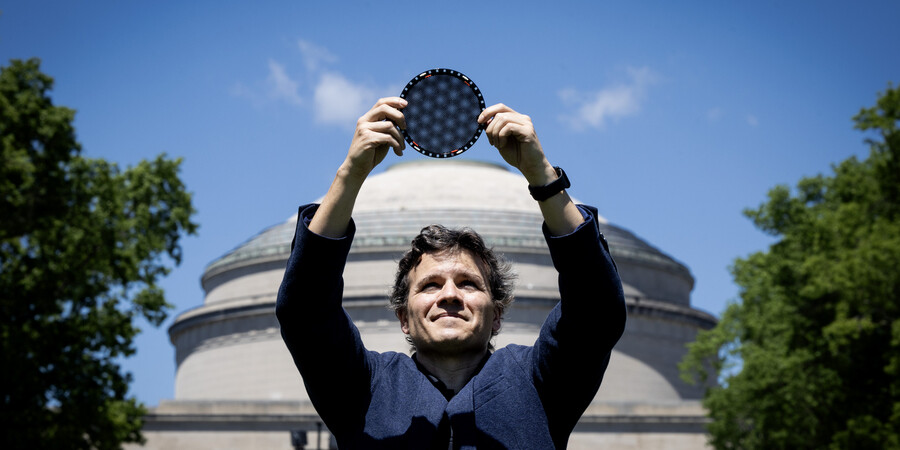
Pablo Jarillo-Herrero wins Kavli Prize in Nanoscience
Julia C. Keller | School of Science
The MIT physicist shares the honor with two others for foundational research establishing the field of twistronics.
Discovering the Joy of Future-forward Electrical Engineering
Jane Halpern | Department of Electrical Engineering and Computer Science
One year in, MIT’s hands-on 6-5 (Electrical Engineering With Computing) degree program is already one of the most popular majors among first-year students.


