

April 1, 2024
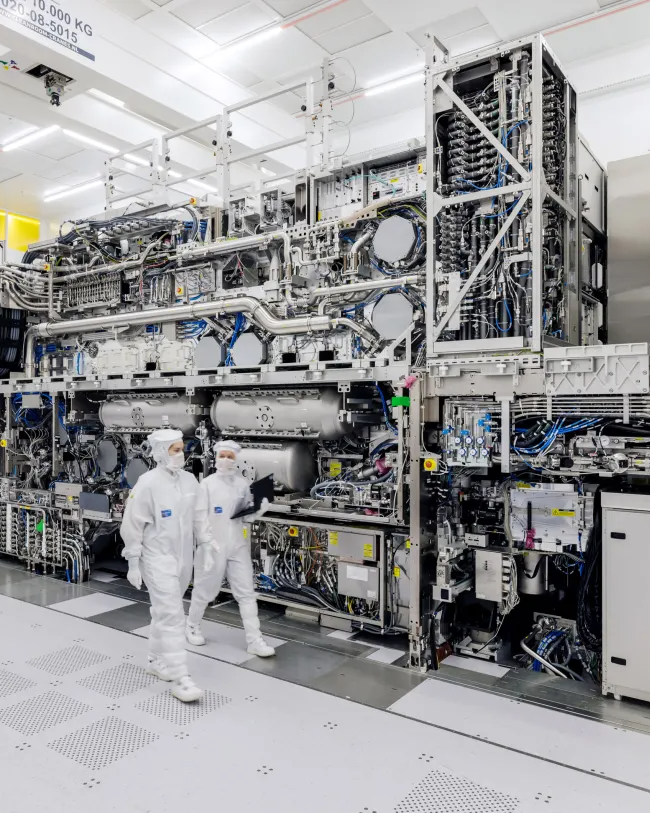
On a drab Monday morning in San Jose, California, at the drab San Jose Convention Center, attendees of the SPIE Advanced Lithography and Patterning Conference filed into the main ballroom until all the seats were taken and the crowd began to line the walls along the back and sides of the room. The convention brings together people who work in the chip industry from all over the world. And on this cool February morning, they had gathered to hear tech industry luminaries extol the late Gordon Moore, Intel’s cofounder and first CEO.
Craig Barrett, also a former CEO of Intel, paid tribute, as did the legendary engineer Burn-Jeng Lin, a pioneer of immersion lithography, a patterning technology that enabled the chip industry to continue moving forward about 20 years ago. Mostly the speeches tended toward reflections on Moore himself—testaments to his genius, accomplishments, and humanity. But the last speaker of the morning, Martin van den Brink, took a different tone, more akin to a victory lap than a eulogy. Van den Brink is the outgoing co-president and CTO of ASML, the Dutch company that makes the machines that in turn let manufacturers produce the most advanced computer chips in the world.
Complete article from MIT Technology Review.
Explore
MIT researchers advance toward greater bandwidth, more energy-efficient communications
Elizabeth A. Thomson | Materials Research Laboratory
The FUTUR-IC research program integrates electronics and photonics in microchip systems.
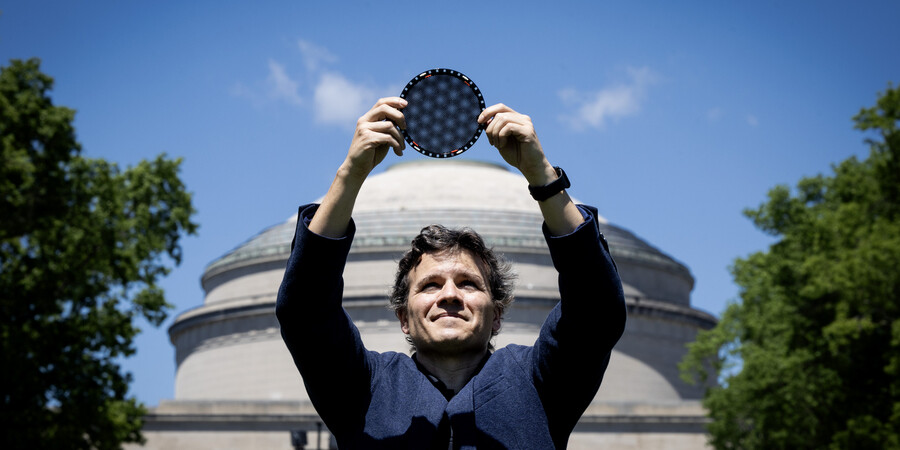
Pablo Jarillo-Herrero wins Kavli Prize in Nanoscience
Julia C. Keller | School of Science
The MIT physicist shares the honor with two others for foundational research establishing the field of twistronics.
Discovering the Joy of Future-forward Electrical Engineering
Jane Halpern | Department of Electrical Engineering and Computer Science
One year in, MIT’s hands-on 6-5 (Electrical Engineering With Computing) degree program is already one of the most popular majors among first-year students.


