


In the 1990s, the US government, countries including China and India, and international bodies such as the World Trade Organization sought to open borders to worldwide trade and capital flows. Today, many large companies are proactively reshaping their supply chains, anticipating continued uncertainty in global affairs, impacts of climate change, and more.
In the United States, government and industry are seeking to build a stronger industrial base to reduce reliance on overseas suppliers. New rules sharply limit the export of US semiconductor components, and “Buy American” clauses in recent legislation affect imports across key industries. Statistics on the volume of trade in goods and capital flows show they remain high, but peaked about 15 years ago. Globalization may, in fact, be reversing.
With this, and the maturation of digital production technologies, manufacturing’s landscape is changing. Advances in 3D printing, sensors, AI, and robotics will allow us to achieve far-greater efficiencies in production, even in high-cost countries. Integrated with production systems, these technologies will lead to greater connectivity among factories and greater output, more flexibility and resilience, and accelerated development and deployment of low-carbon solutions.
Explore
MIT researchers advance toward greater bandwidth, more energy-efficient communications
Elizabeth A. Thomson | Materials Research Laboratory
The FUTUR-IC research program integrates electronics and photonics in microchip systems.
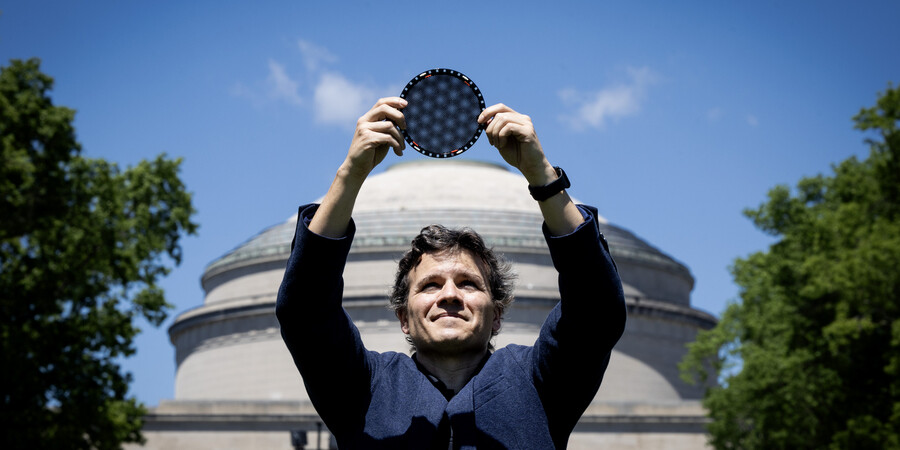
Pablo Jarillo-Herrero wins Kavli Prize in Nanoscience
Julia C. Keller | School of Science
The MIT physicist shares the honor with two others for foundational research establishing the field of twistronics.
Discovering the Joy of Future-forward Electrical Engineering
Jane Halpern | Department of Electrical Engineering and Computer Science
One year in, MIT’s hands-on 6-5 (Electrical Engineering With Computing) degree program is already one of the most popular majors among first-year students.


