

Monday, February 28, 2022 | 1:00 PM – 2:00 PM ET
Speaker: Wei Wu, University of Southern California
Please register here to receive Zoom details fo this MIT.nano seminar.
Abstract: Algorithms for mobile robotic systems are generally implemented on purely digital computing platforms. Developing alternative computational platforms may lead to more energy efficient and responsive mobile robotics. In this talk, Wu will present a hybrid analog-digital computing platform enabled by memristors on a mobile inverted pendulum robot. The “cerebellum” (sensor fusion and motion control) of this mobile robotic system is implemented in memristor-based analogue circuits, and the rest of the system is implemented in digital circuits. Using a model-free optimization method, the mobile robotic system can tune the conductance states of memristors adaptively to achieve optimal control performance. The robot using the hybrid analog-digital platform has a much better performance than using traditional digital circuits.
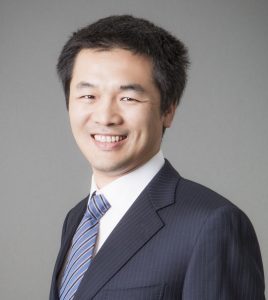 Speaker Bio: Wei Wu graduated from Peking University with a BS in physics in 1996 and received a Ph.D. in electrical engineering from Princeton University in 2003. He is an associate professor at the Ming Hsieh Department of Electrical and Computer Engineering, University of Southern California. Before joining USC in 2012, Wu worked as a research associate, scientist, and senior scientist at HP labs. His work includes nanoimprint lithography and applications in nano-electronics, nano-photonics, plasmonics, chemical sensing and nano-electrochemical cells. He coauthored 116 peer-reviewed scientific journal papers with 10620 citations, two book chapters, and more than 100 conference presentations, including 16 keynote and invited presentations. He has 118 granted US patents. Half of them were also filed internationally. His H-index is 49. Wu is a co-editor of Applied Physics A and an associate editor of IEEE Transactions on Nanotechnology and regional editor (North America) of Nanomanufacturing and Metrology. He was also an IEEE Nanotechnology Council 2015 and 2016 distinguished lecturer, and a recipient of USC Stevens Center for Innovation Commercialization Award 2020.
Explore

III-Nitride Ferroelectrics for Integrated Low-Power and Extreme-Environment Memory
Monday, May 5, 2025 | 4:00 - 5:00pm ET
Hybrid
Zoom & MIT Campus
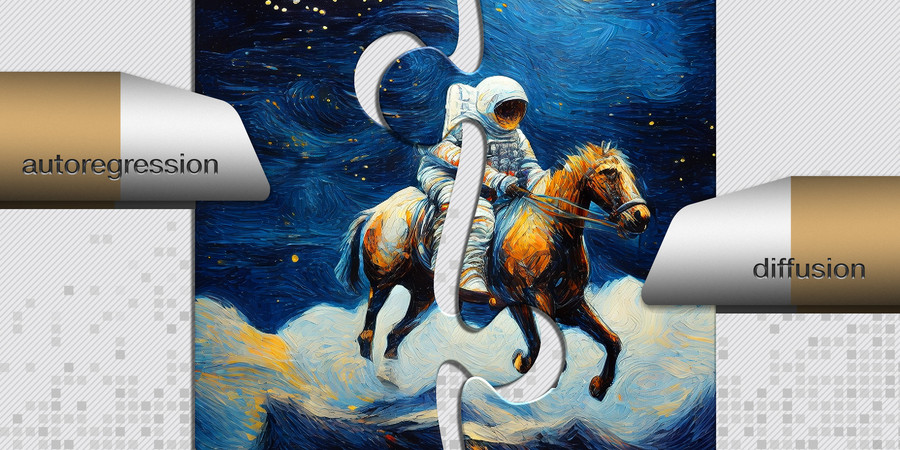
AI Tool Generates High-Quality Images Faster Than State-of-the-Art Approaches
Adam Zewe | MIT News
Researchers fuse the best of two popular methods to create an image generator that uses less energy and can run locally on a laptop or smartphone.

Collaborating to Advance Research and Innovation on Essential Chips for AI
Microsystems Technology Laboratories
Agreement between MIT Microsystems Technology Laboratories and GlobalFoundries aims to deliver power efficiencies for data centers and ultra-low power consumption for intelligent devices at the edge.