
October 3, 2024
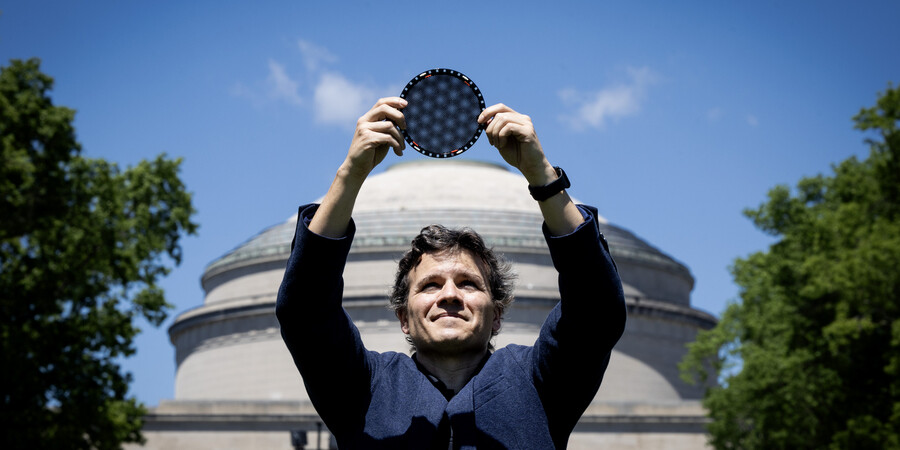
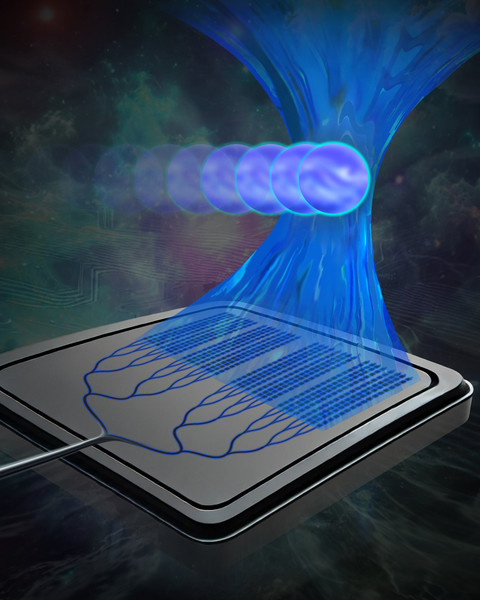
Small enough to fit in the palm of your hand, the device uses a beam of light emitted by a silicon-photonics chip to manipulate particles millimeters away from the chip surface. The light can penetrate the glass cover slips that protect samples used in biological experiments, enabling cells to remain in a sterile environment.
Traditional optical tweezers, which trap and manipulate particles using light, usually require bulky microscope setups, but chip-based optical tweezers could offer a more compact, mass manufacturable, broadly accessible, and high-throughput solution for optical manipulation in biological experiments.
However, other similar integrated optical tweezers can only capture and manipulate cells that are very close to or directly on the chip surface. This contaminates the chip and can stress the cells, limiting compatibility with standard biological experiments.
Complete article from MIT News.
Explore
Discovering the Joy of Future-forward Electrical Engineering
Jane Halpern | Department of Electrical Engineering and Computer Science
One year in, MIT’s hands-on 6-5 (Electrical Engineering With Computing) degree program is already one of the most popular majors among first-year students.
New Photonic Device Efficiently Beams Light into Free Space
Adam Zewe | MIT News
Light-emitting structures that curl off the chip surface could enable advanced displays, high-speed optical communications, and larger-scale quantum computers.
Tomás Palacios appointed Director of ISN
Office of the Vice President for Research
As director, Tomás will lead ISN’s research mission and build communities within MIT and with external partners.