


David L. Chandler | MIT News Office
January 4, 2023
The way electrons interact with photons of light is a key part of many modern technologies, from lasers to solar panels to LEDs. But the interaction is inherently a weak one because of a major mismatch in scale: A wavelength of visible light is about 1,000 times larger than an electron, so the way the two things affect each other is limited by that disparity.
Now, researchers at MIT and elsewhere have come up with an innovative way to make much stronger interactions between photons and electrons possible, in the process producing a hundredfold increase in the emission of light from a phenomenon called Smith-Purcell radiation. The finding has potential implications for both commercial applications and fundamental scientific research, although it will require more years of research to make it practical.
Complete article from MIT News.
Explore
Tomás Palacios appointed Director of ISN
Office of the Vice President for Research
As director, Tomás will lead ISN’s research mission and build communities within MIT and with external partners.

Lisa Su ’90, SM ’91, PhD ’94 to deliver MIT’s 2026 Commencement address
Kathy Wren | MIT News
An electrical engineer by training, Su is the chair and CEO of the semiconductor company AMD.
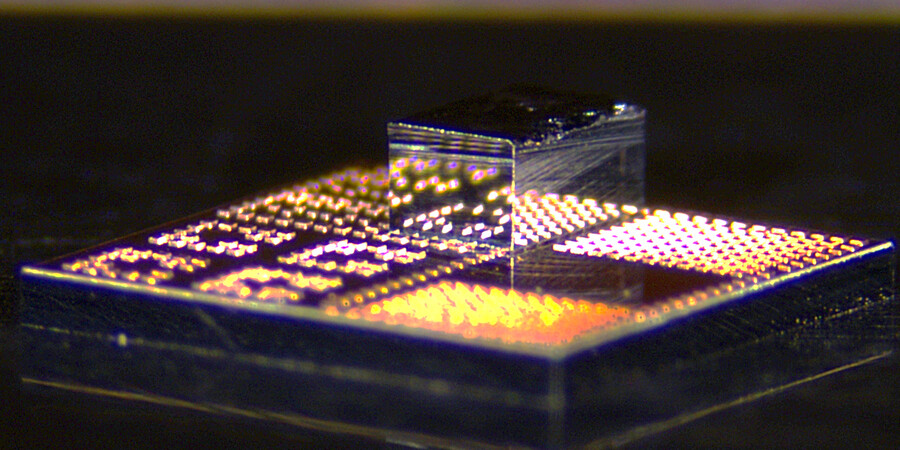
New 3D Chips could Make Electronics Faster and more Energy-Efficient
Adam Zewe | MIT News
The low-cost, scalable technology can seamlessly integrate high-speed gallium nitride transistors onto a standard silicon chip.


