

A highly optimized 22FDSOI Logic Architecture for Power, Performance, Area (PPA) and cost is presented. Unique features of FDSOI technology including channel strain based PFET transistor performance enhancement are further advanced with innovative low cost MOL/BEOL based special constructs. The new constructs allow a highly optimized continuous active PFET transistor based (CNRX) library design. Based on this architecture, PPA advantage is demonstrated over competing bulk and FinFET technologies. In addition, design and implementation of Body-Bias Generator (BBGEN) for Forward Back-Bias (FBB) operation of transistor devices in 22FDX Fully Depleted Silicon-On-Insulator (FD-SOI) process. This architecture has also been implemented for on demand device trimming applications to enhance the performance of slow devices towards faster corner by the application of Threshold Voltage (VT) tuning using FBB. The technology is also tuned to operate at near-Threshold as well as optimized for edge AI applications with further enhancement of library and special logic & memory based synthesizable unit called SLM (Synthesizable Logic memory).
Hosted by the MIT AI Hardware Program and the Microsystems Technology Laboratory.
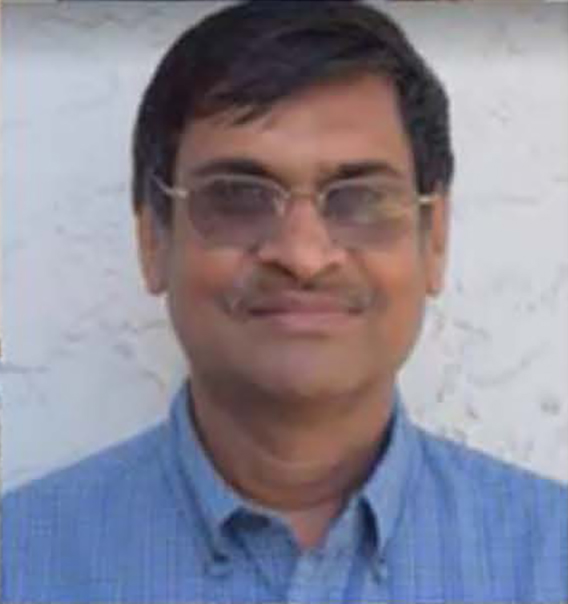
Speaker
Navneet Jain
Navneet Jain is a Distinguished Member Technical Staff at GlobalFoundries, Inc, Santa Clara, since 2009. He holds a PhD and MTech in EE form IIT Delhi, India and BE(Hons) in EEE from BITS Pilani, India. He has over 25 years of experience in the field of circuit/logic design, optimization and methodologies for timing closures for microprocessor and graphics chip design at SGI, Transmeta, AMD, SGI, Software &Technologies (Duet) and Center for Applied Research in Electronics (CARE) at IIT Delhi. At GlobalFoundries he has architected and productized standard cells libraries in 22FDX, 12LPP, and 45SPCLO including several test chips for FAB silicon validations with emphasis on developing ultra-lower and low leakage design. Navneet has over 20 patents and 10 publications in IEEE transactions and international conferences.
Explore

MIT researchers advance toward greater bandwidth, more energy-efficient communications
Elizabeth A. Thomson | Materials Research Laboratory
The FUTUR-IC research program integrates electronics and photonics in microchip systems.
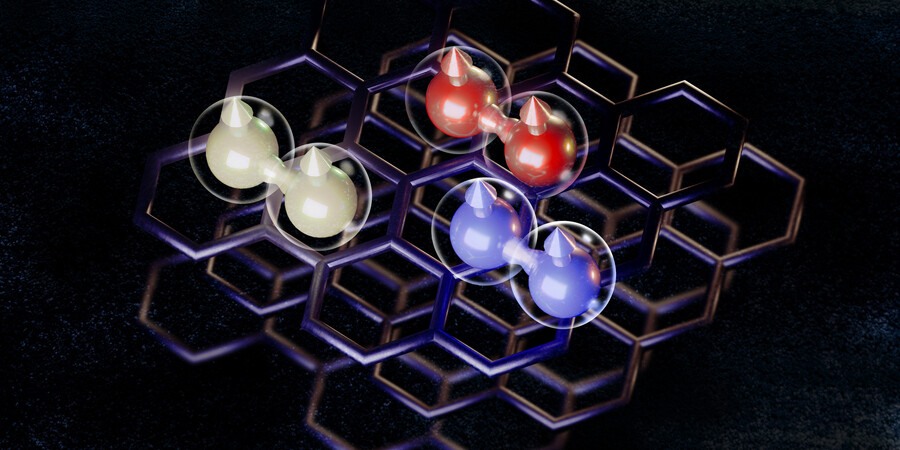
Graphene can hold multiple states of superconductivity, a new study finds
Jennifer Chu | MIT News
What’s more, the superconducting states get stronger under conditions expected to kill them.
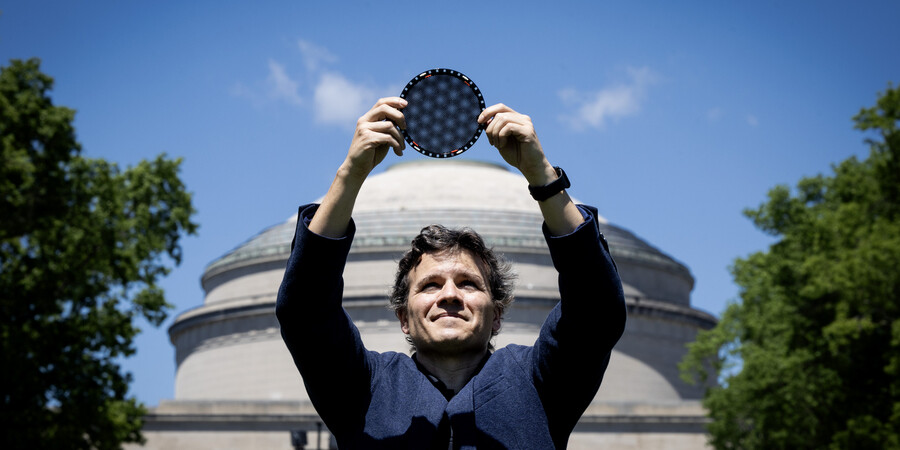
Pablo Jarillo-Herrero wins Kavli Prize in Nanoscience
Julia C. Keller | School of Science
The MIT physicist shares the honor with two others for foundational research establishing the field of twistronics.