

MIDDAS envisions a future where massive, diverse memories are physically integrated yet functionally store disaggregated data, enabled by holistic co-design from device to software. MIDDAS encompasses a continuous spectrum of memory characteristics. This is exemplified by BRIDGE (Blended Retention-Indexed Diverse Gain cEll), an innovative on-chip memory solution that offers high density, low energy consumption, and high speed, with tunable retention.
This event is part of the Joint MIT AI Hardware Program and Microsystems Technology Laboratories Seminar Series.
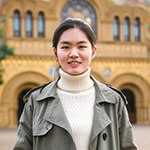
Speaker
Shuhan Liu
Shuhan Liu is a PhD candidate at Stanford University, advised by H.-S. Philip Wong. She earned B.S. degree from Peking University in 2020. Her first-author work includes IEDM’23, ‘24 (2 papers), ‘25 (2 papers), and VLSI’23, ‘24, and SOSP Big Mem’25, and EDL’23, T-ED’24, ‘25. She received 2024 IEEE EDS PhD Fellowship and 2024 IEEE IEDM Best Student Paper Award.
Explore
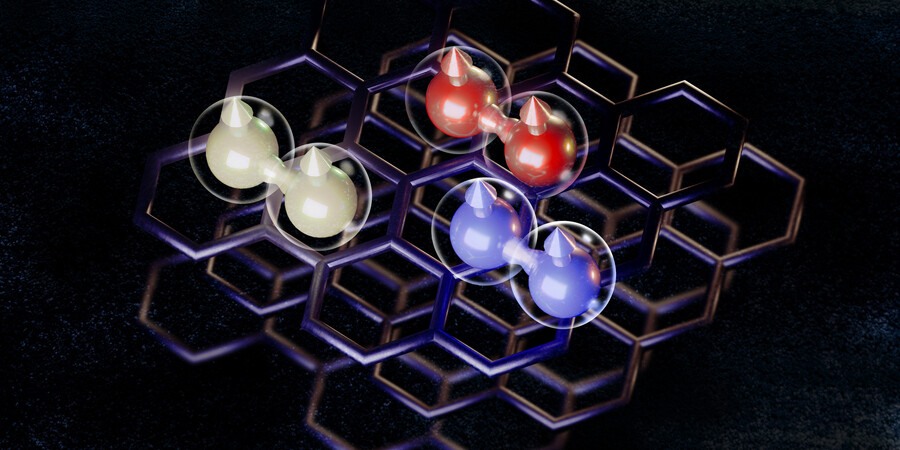
Graphene can hold multiple states of superconductivity, a new study finds
Jennifer Chu | MIT News
What’s more, the superconducting states get stronger under conditions expected to kill them.
Improving the reliability of circuits for quantum computers
Adam Zewe | MIT News
A new technique helps scientists measure a phenomenon that can cause quantum circuits to perform differently than expected, increasing the error in computations.
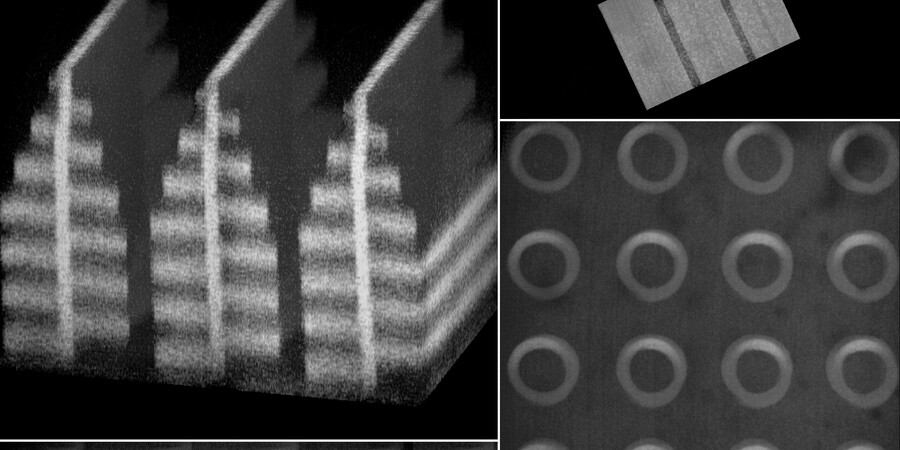
Powerful shrinking technique could enable devices that compute with light
Anne Trafton | MIT News
MIT researchers created tiny 3D photonic devices with features small enough to channel visible light.