November 6, 2025
Superconductors are like the express trains in a metro system. Any electricity that “boards” a superconducting material can zip through it without stopping and losing energy along the way. As such, superconductors are extremely energy efficient, and are used today to power a variety of applications, from MRI machines to particle accelerators.
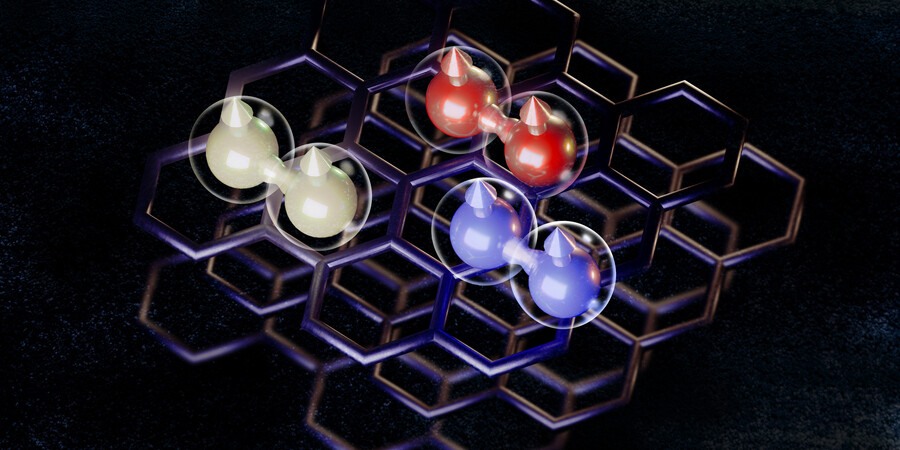
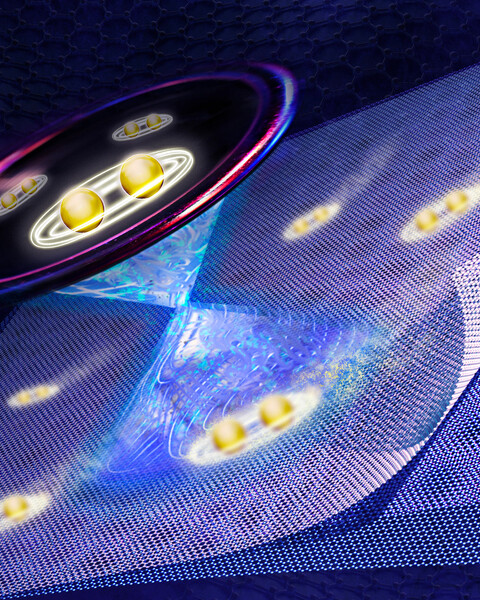
But these “conventional” superconductors are somewhat limited in terms of uses because they must be brought down to ultra-low temperatures using elaborate cooling systems to keep them in their superconducting state. If superconductors could work at higher, room-like temperatures, they would enable a new world of technologies, from zero-energy-loss power cables and electricity grids to practical quantum computing systems. And so scientists at MIT and elsewhere are studying “unconventional” superconductors — materials that exhibit superconductivity in ways that are different from, and potentially more promising than, today’s superconductors.
Complete article from MIT News.
Explore
What Makes a Good Proton Conductor?
Zach Winn | MIT News
MIT researchers found a way to predict how efficiently materials can transport protons in clean energy devices and other advanced technologies.
New Materials Could Boost the Energy Efficiency of Microelectronics
Adam Zewe | MIT News
By stacking multiple active components based on new materials on the back end of a computer chip, this new approach reduces the amount of energy wasted during computation.
A “seating chart” for Atoms Helps Locate Their Positions in Materials
Jennifer Chu | MIT News
The DIGIT imaging tool could enable the design of quantum devices and shed light on atomic-scale processes in cells and tissues.