March 25, 2026
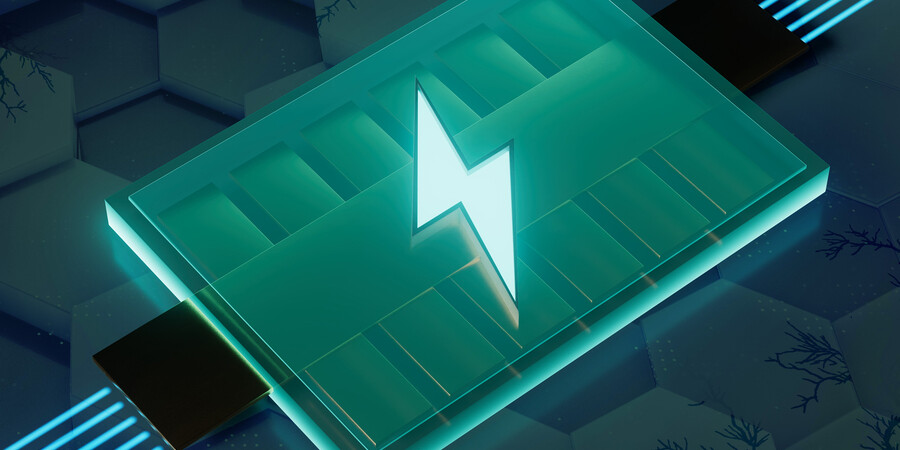
Batteries that use solids as their charge-carrying electrolyte could potentially be a safer and far more energy-dense alternative to lithium-ion batteries. However, these solid-state batteries have been plagued by the formation of metallic cracks called dendrites that cause them to short circuit.
The problem has so far prevented such batteries from becoming a major player in energy storage. But now, research from MIT could finally help engineers find a way to get past this hurdle.
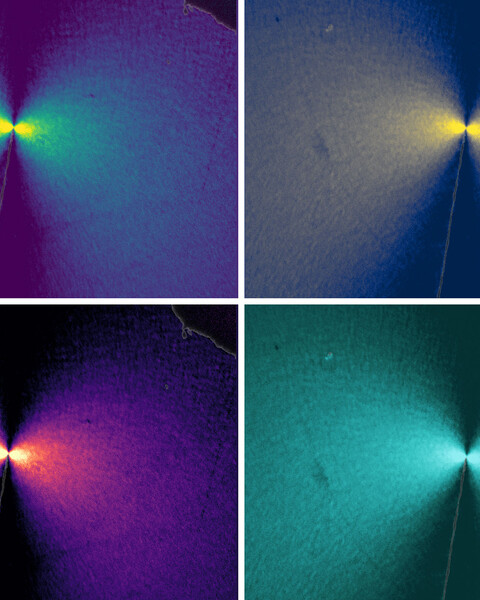
For decades, many researchers have treated dendrites as largely the result of mechanical stress — like cracks that form on the sidewalk when a tree root grows underneath. But MIT engineers have discovered the exact opposite: Faster dendrite growth was associated with lower stress levels in a commonly used battery electrolyte material. Using a new technique that allowed them to directly measure the stress around growing dendrites, the researchers found cracks formed at stress levels as low as 25 percent of what would be expected under mechanical stress alone.
Complete article from MIT News.
Explore
MIT Researchers use AI to Uncover Atomic Defects in Materials
Zach Winn | MIT News
A new model measures defects that can be leveraged to improve materials’ mechanical strength, heat transfer, and energy-conversion efficiency.
“Near-misses” in Particle Accelerators can Illuminate New Physics, Study finds
Jennifer Chu | MIT News
Physicists discovered new properties of the strong force by analyzing what happens when light-speed particles skim by each other.
MIT Engineers Design Structures that Compute with Heat
Adam Zewe | MIT News
By leveraging excess heat instead of electricity, microscopic silicon structures could enable more energy-efficient thermal sensing and signal processing.