October 22, 2025
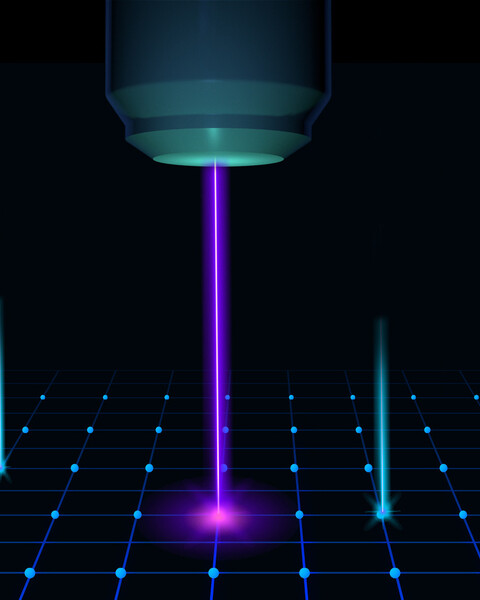
If you think of a single atom as a grain of sand, then a wavelength of visible light — which is a thousand times larger than the atom’s width — is comparable to an ocean wave. The light wave can dwarf an atom, missing it entirely as it passes by. This gulf in size has long made it impossible for scientists to see and resolve individual atoms using optical microscopes alone.
Only recently have scientists found ways to break this “diffraction limit,” to see features that are smaller than the wavelength of light. With new techniques known as super-resolution microscopy, scientists can see down to the scale of a single molecule.
Complete article from MIT News.
Explore
What Makes a Good Proton Conductor?
Zach Winn | MIT News
MIT researchers found a way to predict how efficiently materials can transport protons in clean energy devices and other advanced technologies.
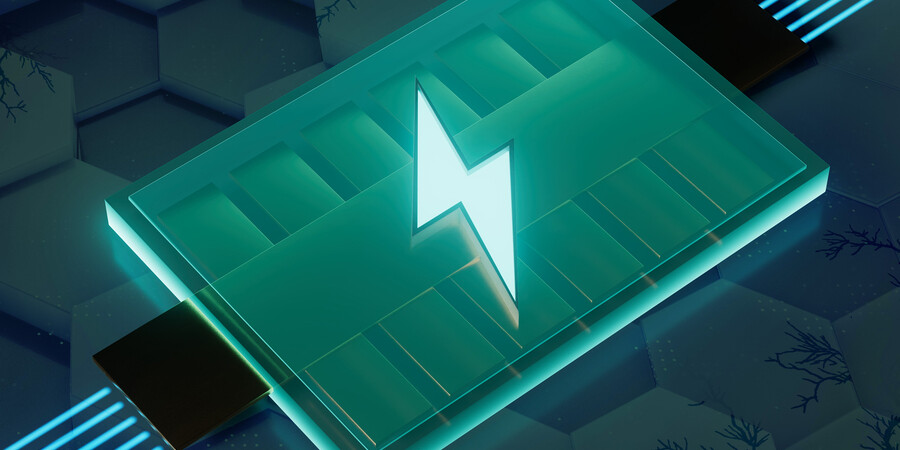
New Materials Could Boost the Energy Efficiency of Microelectronics
Adam Zewe | MIT News
By stacking multiple active components based on new materials on the back end of a computer chip, this new approach reduces the amount of energy wasted during computation.
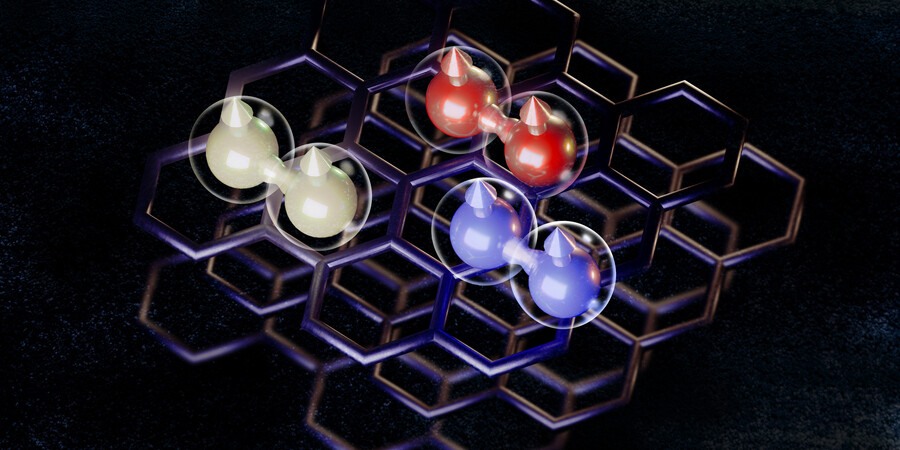
MIT Physicists Observe Key Evidence of Unconventional Superconductivity in Magic-angle Graphene
The findings could open a route to new forms of higher-temperature superconductors.
Jennifer Chu | MIT News