
Jason Sparapani | Department of Materials Science and Engineering
January 27, 2023
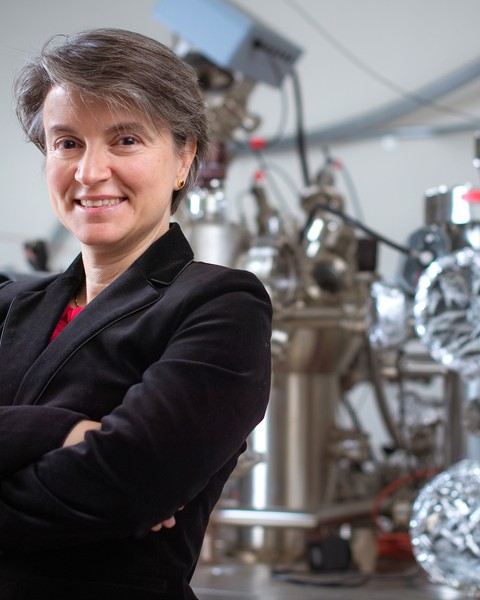
Before being awarded the Koç University Rahmi M. Koç Medal of Science in her native Turkey, Bilge Yildiz was nervous. But it wasn’t standing in front of an audience of hundreds that stressed the Breene M. Kerr Professor in the departments of Nuclear Science and Engineering and of Materials Science and Engineering (DMSE). It wasn’t having to do interviews with journalists. Rather, it was discussing her research in Turkish.
“Two weeks before the award ceremony, I was learning Turkish again,” says Yildiz. Her language of scholarship is English; she came to the United States more than two decades ago, first to do her PhD in nuclear science at MIT, then postdoctoral work in electrochemistry and research at Argonne National Laboratory in Illinois. Even her bachelor’s studies in nuclear science at Hacettepe University in Turkey, where many courses are taught in English, were not in her mother tongue. “I did not learn these materials in Turkish. I never talked about them in Turkish. And all the technical terms especially — I had no idea.”
But Yildiz isn’t known for shying away from new things.
Complete article from MIT News.
Explore
Discovery helps explain why solid-state batteries often fail
Zach Winn | MIT News
New research could help prevent the formation of tiny seeds of lithium metal within the electrolyte, enabling batteries that charge faster and last longer.

MIT researchers advance toward greater bandwidth, more energy-efficient communications
Elizabeth A. Thomson | Materials Research Laboratory
The FUTUR-IC research program integrates electronics and photonics in microchip systems.
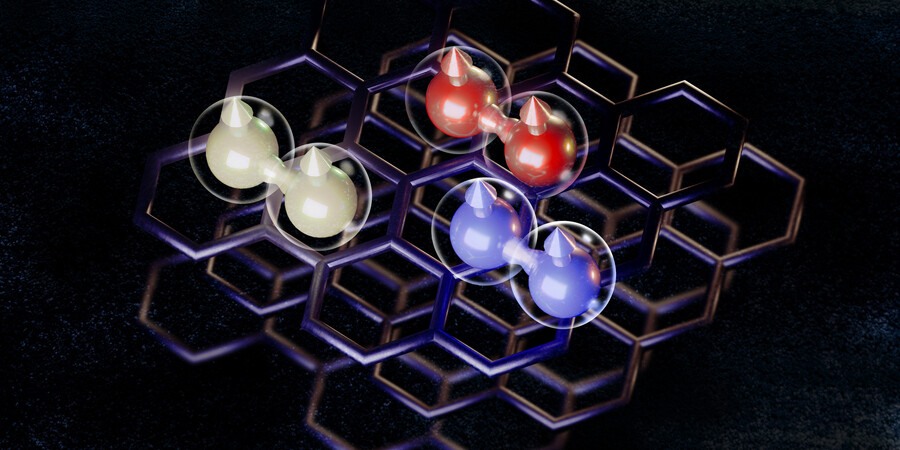
Graphene can hold multiple states of superconductivity, a new study finds
Jennifer Chu | MIT News
What’s more, the superconducting states get stronger under conditions expected to kill them.


