
Explore
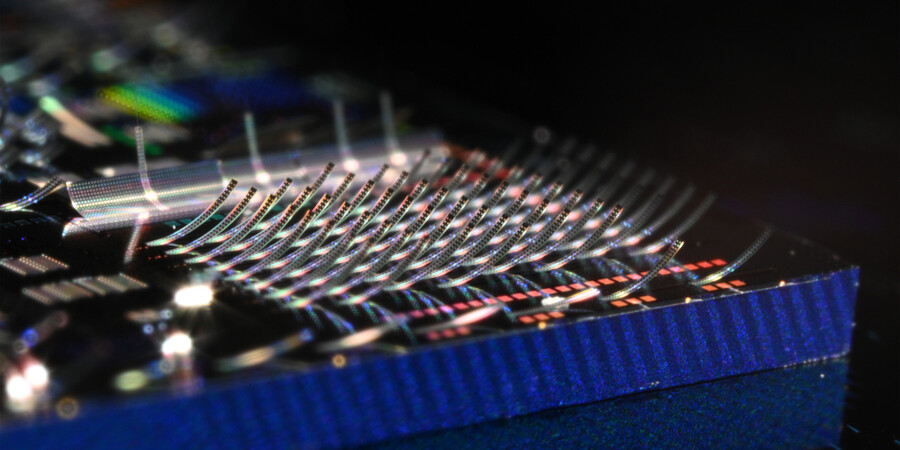
New Photonic Device Efficiently Beams Light into Free Space
Adam Zewe | MIT News
Light-emitting structures that curl off the chip surface could enable advanced displays, high-speed optical communications, and larger-scale quantum computers.
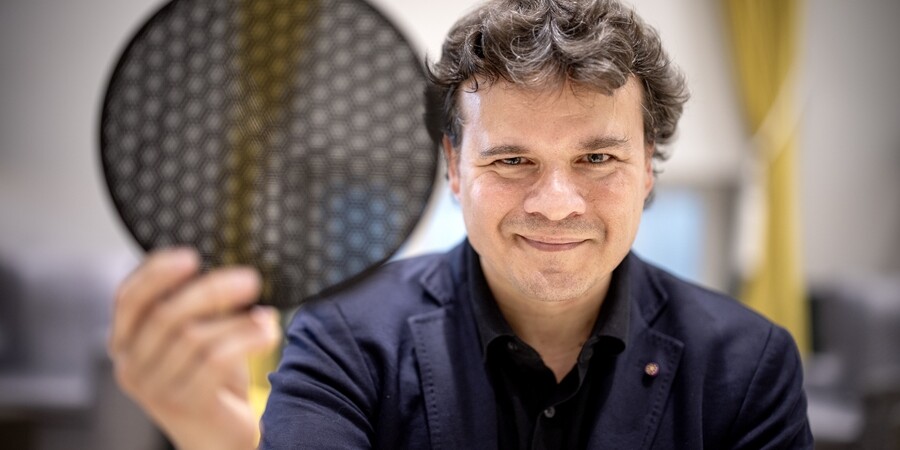
Pablo Jarillo-Herrero wins BBVA Foundation Frontiers of Knowledge Award
MIT physicist shares award for influential work on “magic-angle” graphene.
Materials Research Laboratory
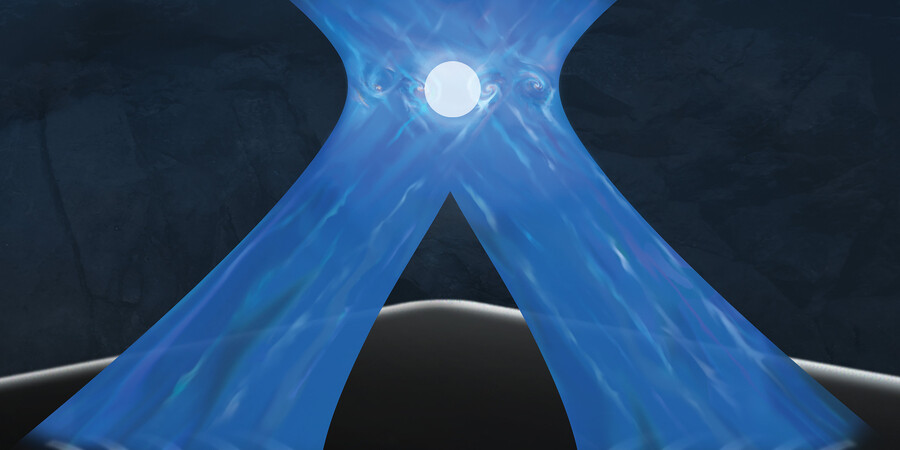
Efficient cooling method could enable chip-based trapped-ion quantum computers
Adam Zewe | MIT News
New technique could improve the scalability of trapped-ion quantum computers, an essential step toward making them practically useful.