


December 15, 2025
A number of advanced energy technologies — including fuel cells, electrolyzers, and an emerging class of low-power electronics — use protons as the key charge carrier. Whether or not these devices will be widely adopted hinges, in part, on how efficiently they can move protons.
One class of materials known as metal oxides has shown promise in conducting protons at temperatures above 400 degrees Celsius. But researchers have struggled to find the best materials to increase the proton conductivity at lower temperatures and improve efficiency.
Now, MIT researchers have developed a physical model to predict proton mobility across a wide range of metal oxides. In a new paper, the researchers ranked the most important features of metal oxides for facilitating proton conduction, and demonstrated for the first time how much the flexibility of the materials’ oxide ions improves their ability to transfer protons.
Complete article from MIT News.
Explore
Discovery helps explain why solid-state batteries often fail
Zach Winn | MIT News
New research could help prevent the formation of tiny seeds of lithium metal within the electrolyte, enabling batteries that charge faster and last longer.
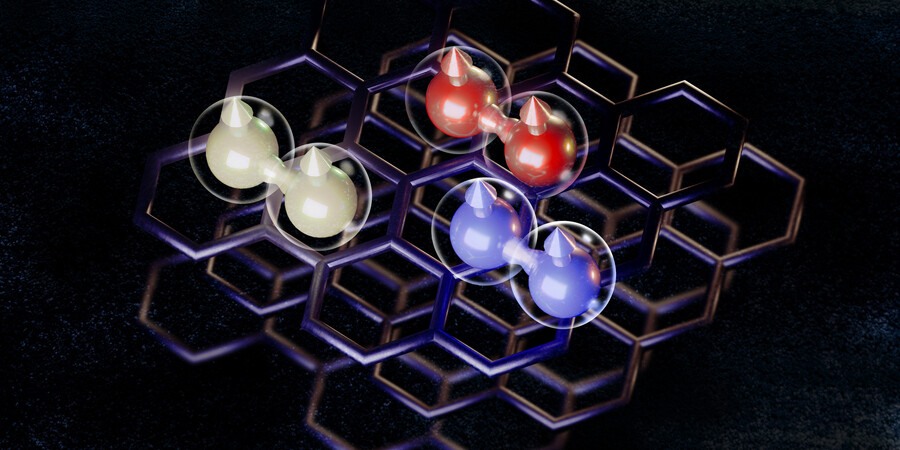
Graphene can hold multiple states of superconductivity, a new study finds
Jennifer Chu | MIT News
What’s more, the superconducting states get stronger under conditions expected to kill them.

Improving the performance of high-power electronics
Adam Zewe | MIT News
By using a thin layer of diamond to manage excessive heat, researchers can boost the speed and energy-efficiency of next-generation wireless devices.


