
December 7, 2023
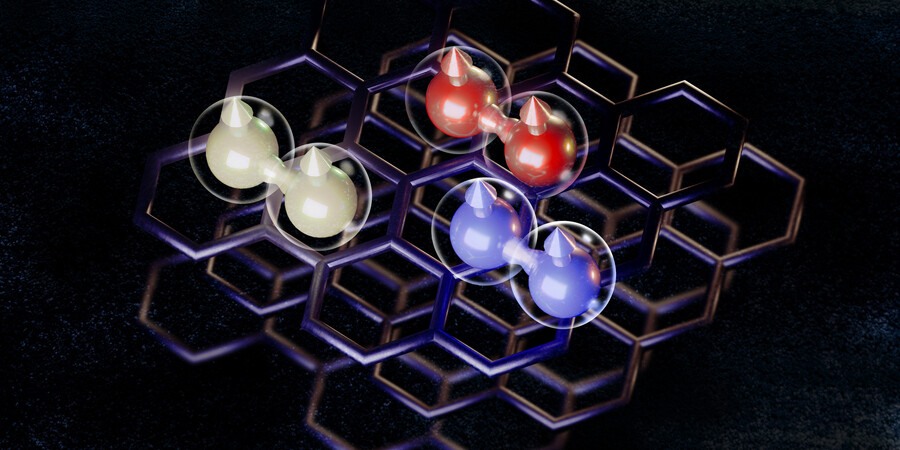
Designing new compounds or alloys whose surfaces can be used as catalysts in chemical reactions can be a complex process relying heavily on the intuition of experienced chemists. A team of researchers at MIT has devised a new approach using machine learning that removes the need for intuition and provides more detailed information than conventional methods can practically achieve.
For example, applying the new system to a material that has already been studied for 30 years by conventional means, the team found the compound’s surface could form two new atomic configurations that had not previously been identified, and that one other configuration seen in previous works is likely unstable.
The findings are described this week in the journal Nature Computational Science, in a paper by MIT graduate student Xiaochen Du, professors Rafael Gómez-Bombarelli and Bilge Yildiz, MIT Lincoln Laboratory technical staff member Lin Li, and three others.
Complete article from MIT News.
Explore
What Makes a Good Proton Conductor?
Zach Winn | MIT News
MIT researchers found a way to predict how efficiently materials can transport protons in clean energy devices and other advanced technologies.
Lisa Su ’90, SM ’91, PhD ’94 to deliver MIT’s 2026 Commencement address
Kathy Wren | MIT News
An electrical engineer by training, Su is the chair and CEO of the semiconductor company AMD.
New Materials Could Boost the Energy Efficiency of Microelectronics
Adam Zewe | MIT News
By stacking multiple active components based on new materials on the back end of a computer chip, this new approach reduces the amount of energy wasted during computation.