September 22, 2025
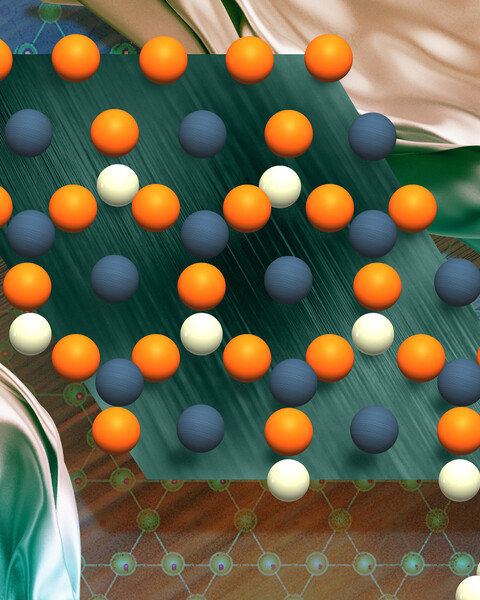
The artificial intelligence models that turn text into images are also useful for generating new materials. Over the last few years, generative materials models from companies like Google, Microsoft, and Meta have drawn on their training data to help researchers design tens of millions of new materials.
But when it comes to designing materials with exotic quantum properties like superconductivity or unique magnetic states, those models struggle. That’s too bad, because humans could use the help. For example, after a decade of research into a class of materials that could revolutionize quantum computing, called quantum spin liquids, only a dozen material candidates have been identified. The bottleneck means there are fewer materials to serve as the basis for technological breakthroughs.
Complete article from MIT News.
Explore
What Makes a Good Proton Conductor?
Zach Winn | MIT News
MIT researchers found a way to predict how efficiently materials can transport protons in clean energy devices and other advanced technologies.
New Materials Could Boost the Energy Efficiency of Microelectronics
Adam Zewe | MIT News
By stacking multiple active components based on new materials on the back end of a computer chip, this new approach reduces the amount of energy wasted during computation.
MIT Physicists Observe Key Evidence of Unconventional Superconductivity in Magic-angle Graphene
The findings could open a route to new forms of higher-temperature superconductors.
Jennifer Chu | MIT News