Sandi Miller | Department of Physics
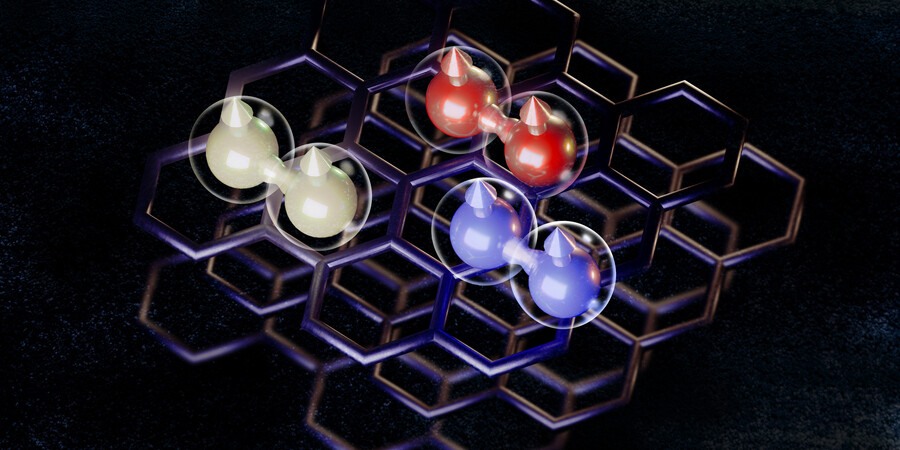
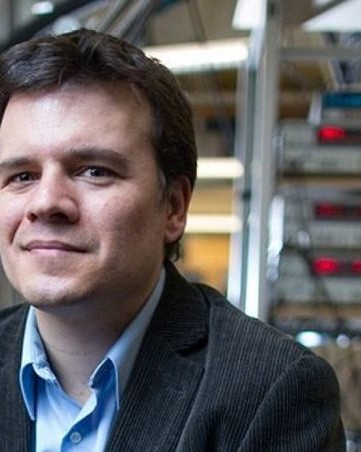
In 2018, Jarillo-Herrero’s research group discovered that by rotating two layers of graphene by a “magic angle,” the bilayer material can be turned from a metal into an electrical insulator or even a superconductor.
Max Planck Society President Martin Stratmann noted Jarillo-Herrero’s research on two-dimensional quantum materials has “opened up a new field of research in which many fundamental insights for both quantum science and quantum technology can be expected.”
Hans-Christian Pape, president of the Alexander von Humboldt Foundation, said that this research “has the potential to make electronic components more efficient and computers faster and to increase the superconductivity of materials.”
Complete article from MIT News.
Explore
What Makes a Good Proton Conductor?
Zach Winn | MIT News
MIT researchers found a way to predict how efficiently materials can transport protons in clean energy devices and other advanced technologies.
New Materials Could Boost the Energy Efficiency of Microelectronics
Adam Zewe | MIT News
By stacking multiple active components based on new materials on the back end of a computer chip, this new approach reduces the amount of energy wasted during computation.
MIT Physicists Observe Key Evidence of Unconventional Superconductivity in Magic-angle Graphene
The findings could open a route to new forms of higher-temperature superconductors.
Jennifer Chu | MIT News