February 28, 2023
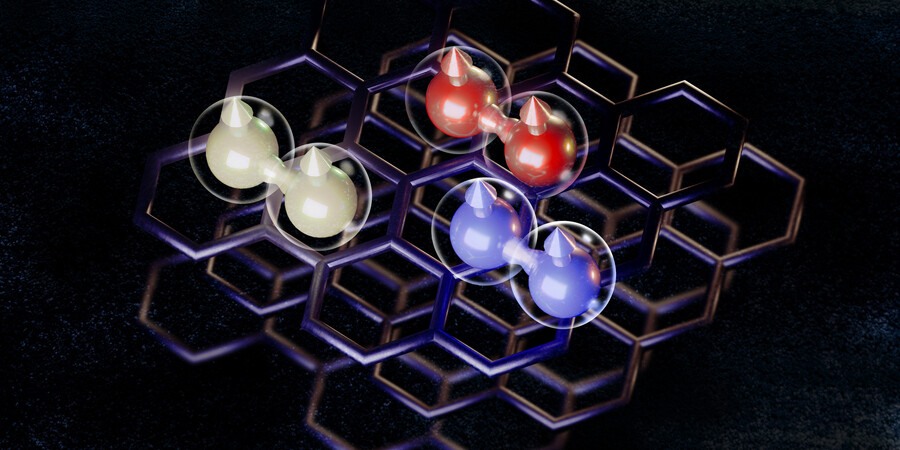
In 2010, Phiala Shanahan was an undergraduate at the University of Adelaide, wrapping up a degree in computational physics, when she heard of an unexpected discovery in particle physics. The news had nothing to do with any of the rare, exotic particles that physicists were searching for at the time. Rather, the revelation revolved around the mundane, ubiquitous proton.
That year, scientists had measured the proton’s radius and discovered that the particle was ever so slightly smaller than what previous experiments had reported. This new measurement threw into question what physicists had assumed was well-understood: What exactly was the size of the proton?
What would then be coined the “proton radius puzzle” immediately drew Shanahan’s interest, prompting a more fundamental question: What else don’t we know about this seemingly straightforward particle?
Complete article from MIT News.
Explore
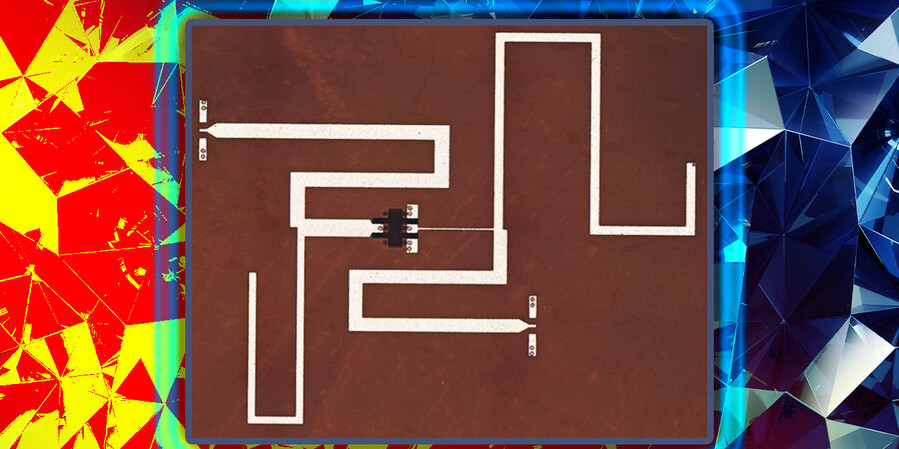
MIT Researchers use AI to Uncover Atomic Defects in Materials
Zach Winn | MIT News
A new model measures defects that can be leveraged to improve materials’ mechanical strength, heat transfer, and energy-conversion efficiency.
“Near-misses” in Particle Accelerators can Illuminate New Physics, Study finds
Jennifer Chu | MIT News
Physicists discovered new properties of the strong force by analyzing what happens when light-speed particles skim by each other.
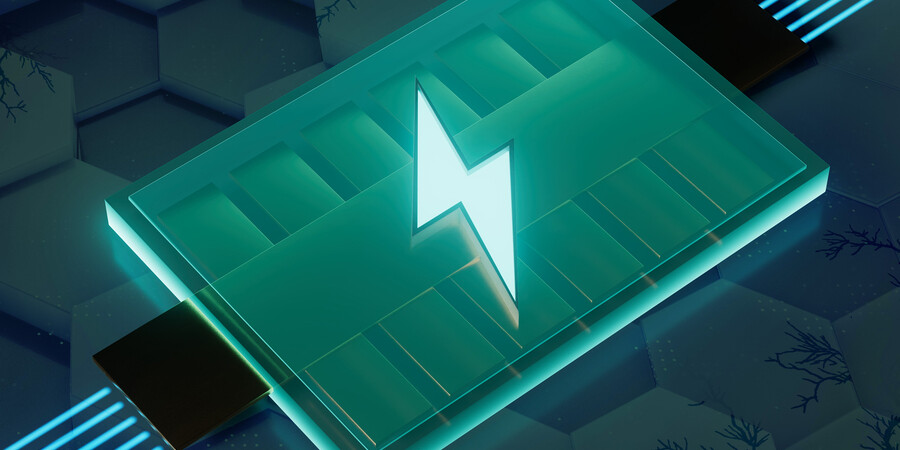
Why Solid-state Batteries Keep Short-circuiting
Zach Winn | MIT News
New insights into metallic cracks that harm battery performance could advance the longstanding quest to develop energy-dense solid-state batteries.