September 13, 2023
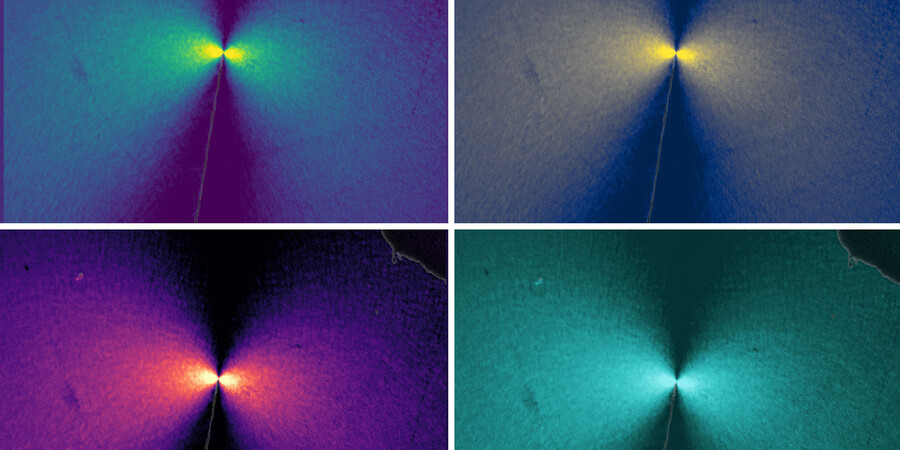
By mining data from X-ray images, researchers have made significant new discoveries about the reactivity of lithium iron phosphate, a material used in batteries for electric cars and in other rechargeable batteries.
The new technique has revealed several phenomena that were previously impossible to see, including variations in the rate of lithium intercalation reactions in different regions of a lithium iron phosphate nanoparticle.
These variations in reaction rate are correlated with differences in the thickness of the carbon coating on the surface of the particles — could lead to improvements in the efficiency of charging and discharging such batteries.
“What we learned from this study is that it’s the interfaces that really control the dynamics of the battery, especially in today’s modern batteries made from nanoparticles of the active material. That means that our focus should really be on engineering that interface,” says Martin Bazant, the E.G. Roos Professor of Chemical Engineering and a professor of mathematics at MIT, who is the senior author of the study.
Complete article from MIT News.
Explore
What Makes a Good Proton Conductor?
Zach Winn | MIT News
MIT researchers found a way to predict how efficiently materials can transport protons in clean energy devices and other advanced technologies.
New Materials Could Boost the Energy Efficiency of Microelectronics
Adam Zewe | MIT News
By stacking multiple active components based on new materials on the back end of a computer chip, this new approach reduces the amount of energy wasted during computation.
MIT Physicists Observe Key Evidence of Unconventional Superconductivity in Magic-angle Graphene
The findings could open a route to new forms of higher-temperature superconductors.
Jennifer Chu | MIT News