
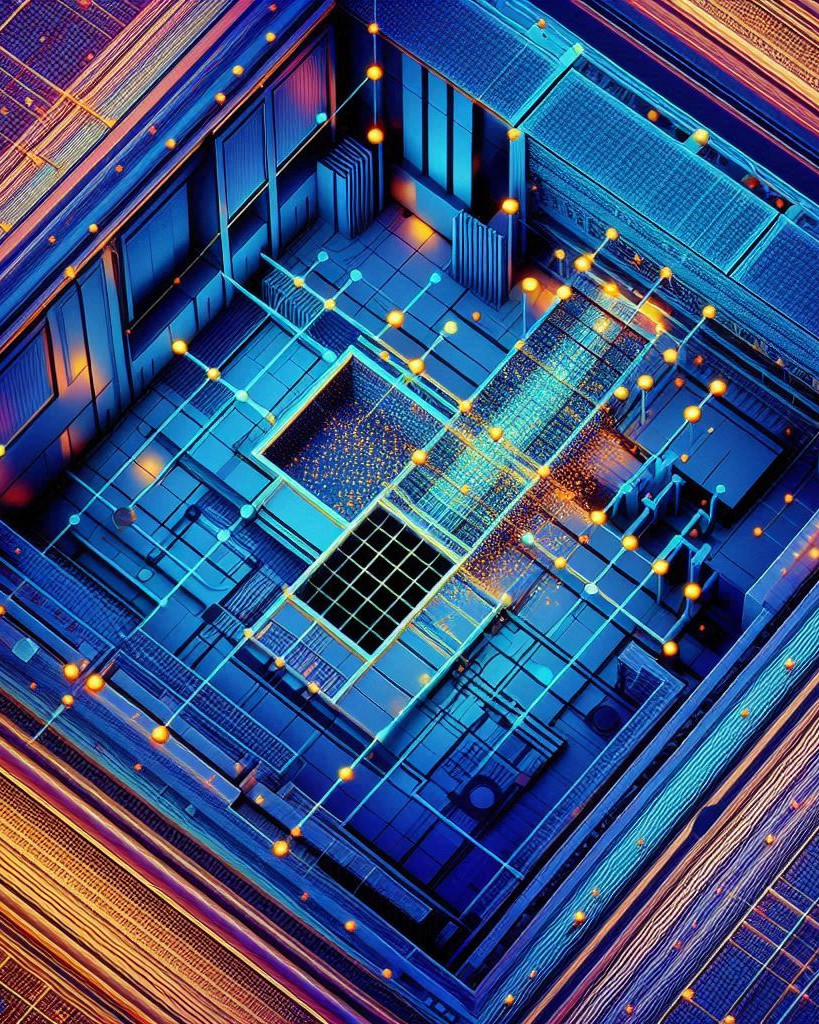
EUV lithography is now used to manufacture the most advanced integrated circuits, including memory, logic and AI chips, but Moore’s Law demands constant improvements. The NXE system is our 0.33NA platform which continues to evolve with better throughput via greater EUV source power, smaller Edge Placement Errors (EPE) and higher uptime. One possibility for further EPE reduction is to increase image contrast through the use of advanced exposure methods such as Dual Monopole.

Speaker
Tim Brunner
Tim Brunner holds a B.A. from Carleton College and a Ph.D from MIT, all in physics. He has worked in the area of lithography for chip production since 1981. After many years at IBM, he joined ASML in 2019, working in the Technology Development Center.
Explore
Discovery helps explain why solid-state batteries often fail
Zach Winn | MIT News
New research could help prevent the formation of tiny seeds of lithium metal within the electrolyte, enabling batteries that charge faster and last longer.

MIT researchers advance toward greater bandwidth, more energy-efficient communications
Elizabeth A. Thomson | Materials Research Laboratory
The FUTUR-IC research program integrates electronics and photonics in microchip systems.

Graphene can hold multiple states of superconductivity, a new study finds
Jennifer Chu | MIT News
What’s more, the superconducting states get stronger under conditions expected to kill them.