November 6, 2025
Superconductors are like the express trains in a metro system. Any electricity that “boards” a superconducting material can zip through it without stopping and losing energy along the way. As such, superconductors are extremely energy efficient, and are used today to power a variety of applications, from MRI machines to particle accelerators.
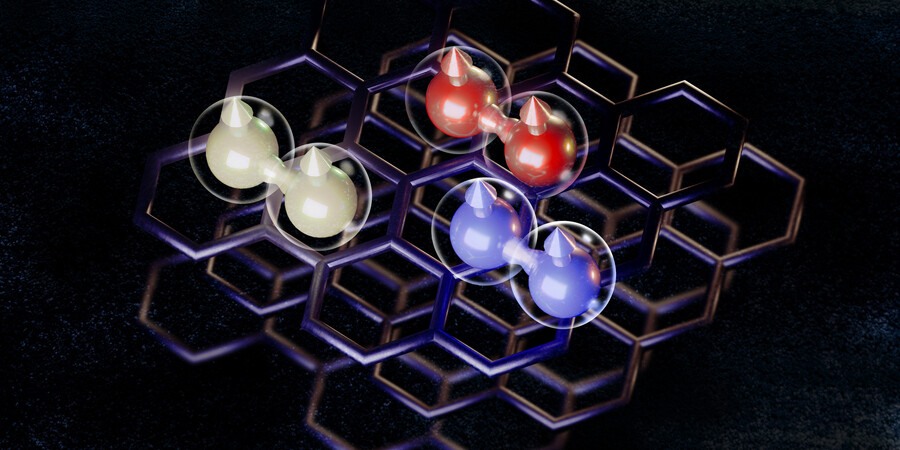
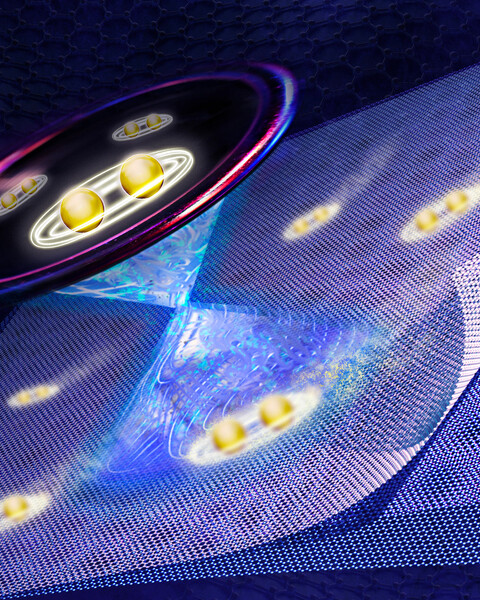
But these “conventional” superconductors are somewhat limited in terms of uses because they must be brought down to ultra-low temperatures using elaborate cooling systems to keep them in their superconducting state. If superconductors could work at higher, room-like temperatures, they would enable a new world of technologies, from zero-energy-loss power cables and electricity grids to practical quantum computing systems. And so scientists at MIT and elsewhere are studying “unconventional” superconductors — materials that exhibit superconductivity in ways that are different from, and potentially more promising than, today’s superconductors.
Complete article from MIT News.
Explore
MIT Researchers use AI to Uncover Atomic Defects in Materials
Zach Winn | MIT News
A new model measures defects that can be leveraged to improve materials’ mechanical strength, heat transfer, and energy-conversion efficiency.
“Near-misses” in Particle Accelerators can Illuminate New Physics, Study finds
Jennifer Chu | MIT News
Physicists discovered new properties of the strong force by analyzing what happens when light-speed particles skim by each other.
Why Solid-state Batteries Keep Short-circuiting
Zach Winn | MIT News
New insights into metallic cracks that harm battery performance could advance the longstanding quest to develop energy-dense solid-state batteries.