
November 27, 2023
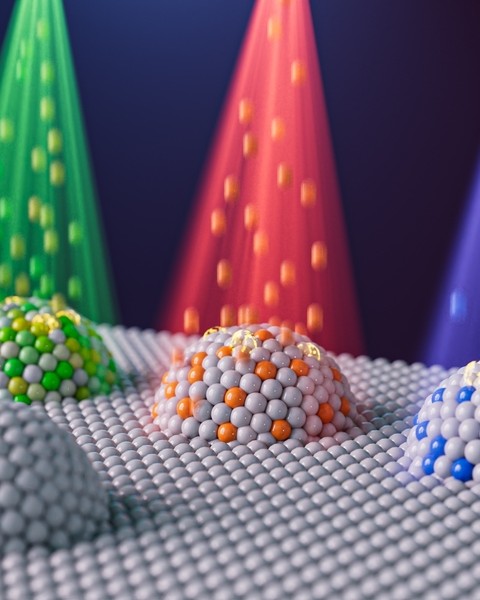
MIT researchers and colleagues have demonstrated a way to precisely control the size, composition, and other properties of nanoparticles key to the reactions involved in a variety of clean energy and environmental technologies. They did so by leveraging ion irradiation, a technique in which beams of charged particles bombard a material.
They went on to show that nanoparticles created this way have superior performance over their conventionally made counterparts.
“The materials we have worked on could advance several technologies, from fuel cells to generate CO2-free electricity to the production of clean hydrogen feedstocks for the chemical industry [through electrolysis cells],” says Bilge Yildiz, leader of the work and a professor in MIT’s departments of Nuclear Science and Engineering and Materials Science and Engineering.
Complete article from MIT News.
Explore
Discovery helps explain why solid-state batteries often fail
Zach Winn | MIT News
New research could help prevent the formation of tiny seeds of lithium metal within the electrolyte, enabling batteries that charge faster and last longer.

MIT researchers advance toward greater bandwidth, more energy-efficient communications
Elizabeth A. Thomson | Materials Research Laboratory
The FUTUR-IC research program integrates electronics and photonics in microchip systems.
Graphene can hold multiple states of superconductivity, a new study finds
Jennifer Chu | MIT News
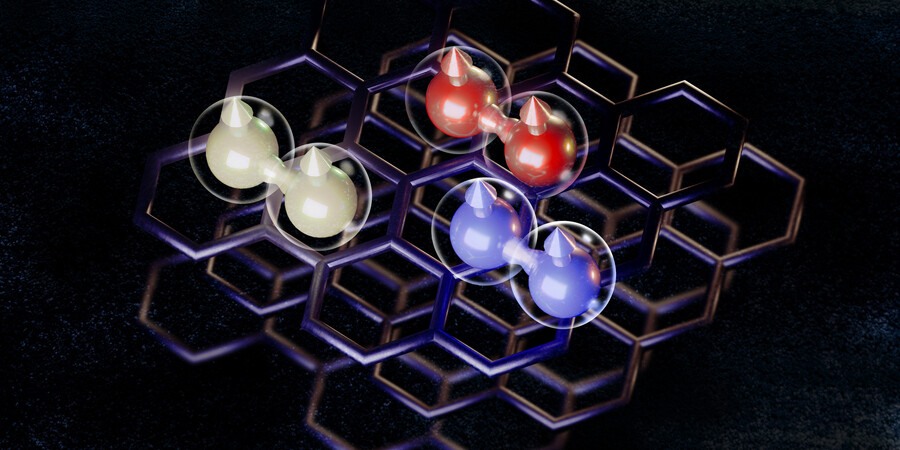
What’s more, the superconducting states get stronger under conditions expected to kill them.


