


A New Language for Quantum Computing
Rachel Gordon | MIT CSAIL
Twist is an MIT-developed programming language that can describe and verify which pieces of data are entangled to prevent bugs and properly compute in a quantum program.

Education and Workforce Development for the U.S. Microelectronics Industry
Thursday, February 3, 2022 | 9:45am - 5:00pm EST
Organized by State University of New York, Massachusetts Institute of Technology, and Rensselaer Polytechnic Institute

Reasserting U.S. Leadership in Microelectronics
Adam Zewe | MIT News Office
MIT researchers lay out a strategy for how universities can help the U.S. regain its place as a semiconductor superpower.

Clean Room as Classroom
Amanda Stoll | MIT.nano
MIT undergraduates are using labs at MIT.nano to tinker at the nanoscale, exploring spectrometry, nanomaterial synthesis, photovoltaics, sensor fabrication, and gowning up in a bunny suit and performing hands-on research inside a clean room.

Anantha Chandrakasan Named Recipient of 2022 IEEE Mildred Dresselhaus Award
Jane Halpern | Department of Electrical Engineering and Computer Science
Anantha Chandrakasan, Dean of the MIT School of Engineering, has been named the recipient of the 2022 IEEE Mildred Dresselhaus Medal.
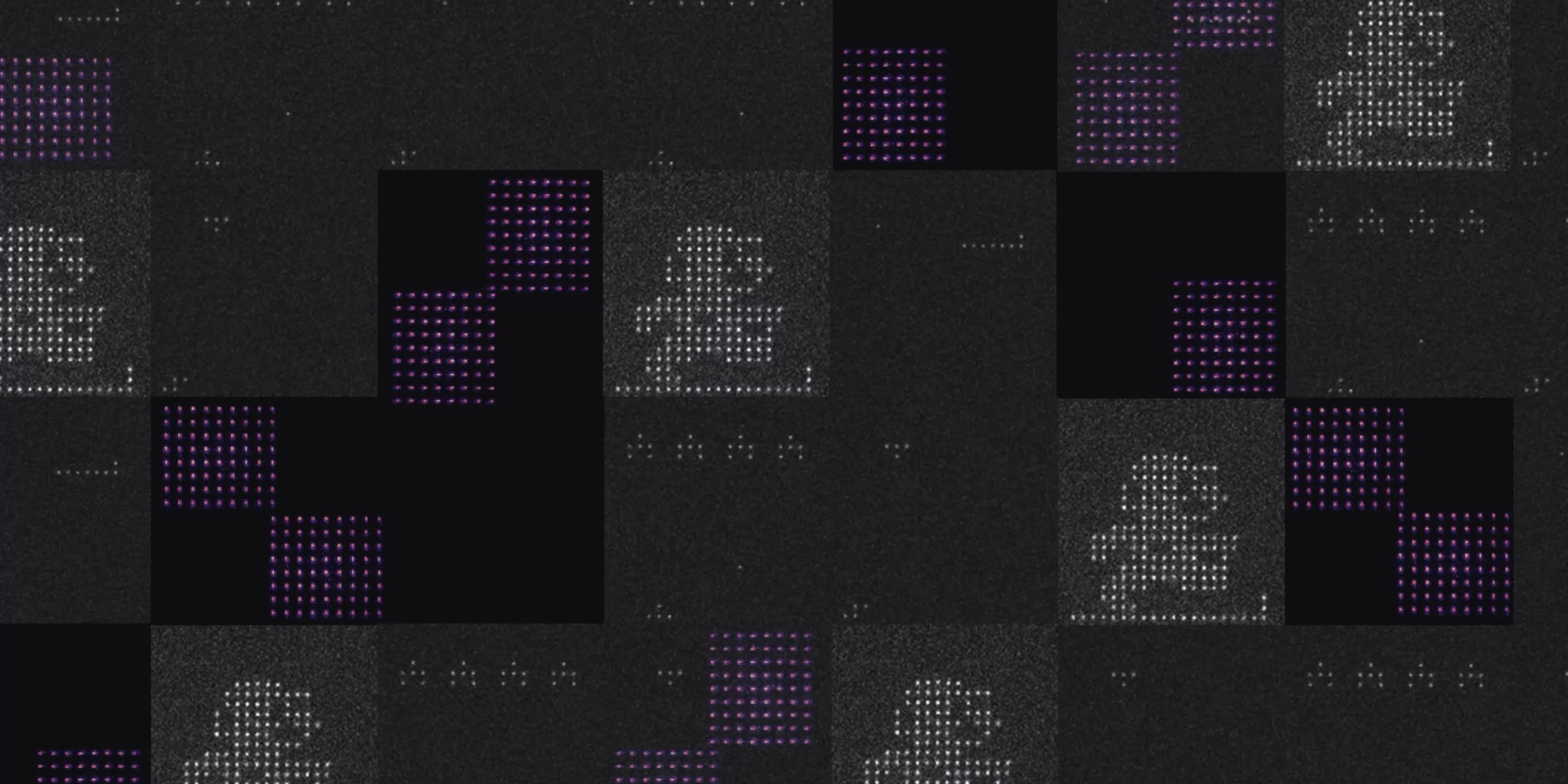
This New Startup has Built a Record-breaking 256-qubit Quantum Computer
Siobhan Roberts | MIT Technology Review
QuEra Computing, launched by physicists at Harvard and MIT, is trying a different quantum approach to tackle impossibly hard computational tasks.

Amplifying Human Potential: Responsible AI & Human-AI Collaboration Research
Friday, November 19, 2021 | 12:00pm ET
Lama Nachman, Intel Corporation

Perspectives and Opportunities in AI Hardware
Friday, November 5, 2021 | 11:00am-12:00pm ET
Speaker: Dr. Jeffrey L. Burns, IBM Research
From Smaller Transistors to Cleaner Qubits: The Continuous Quest for Higher Performance in Computing
Wednesday, October 20, 2021 | 12:00pm ET
Speaker: Iuliana Radu, IMEC
Atomic-layer-deposited Atomically Thin In2O3 Channel for BEOL Logic and Memory Applications
Wednesday, October 13, 2021 | 1 pm ET
Speaker: Peide (Peter) Ye, Purdue University