

November 30, 2023
The practice of keeping time hinges on stable oscillations. In a grandfather clock, the length of a second is marked by a single swing of the pendulum. In a digital watch, the vibrations of a quartz crystal mark much smaller fractions of time. And in atomic clocks, the world’s state-of-the-art timekeepers, the oscillations of a laser beam stimulate atoms to vibrate at 9.2 billion times per second. These smallest, most stable divisions of time set the timing for today’s satellite communications, GPS systems, and financial markets.
A clock’s stability depends on the noise in its environment. A slight wind can throw a pendulum’s swing out of sync. And heat can disrupt the oscillations of atoms in an atomic clock. Eliminating such environmental effects can improve a clock’s precision. But only by so much.
A new MIT study finds that even if all noise from the outside world is eliminated, the stability of clocks, laser beams, and other oscillators would still be vulnerable to quantum mechanical effects. The precision of oscillators would ultimately be limited by quantum noise.
Complete article from MIT News.
Explore
Tomás Palacios appointed Director of ISN
Office of the Vice President for Research
As director, Tomás will lead ISN’s research mission and build communities within MIT and with external partners.
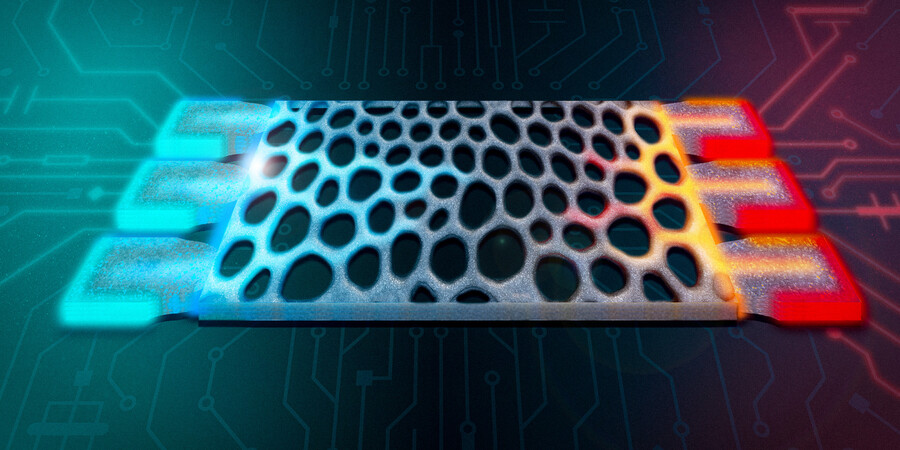
MIT Engineers Design Structures that Compute with Heat
Adam Zewe | MIT News
By leveraging excess heat instead of electricity, microscopic silicon structures could enable more energy-efficient thermal sensing and signal processing.
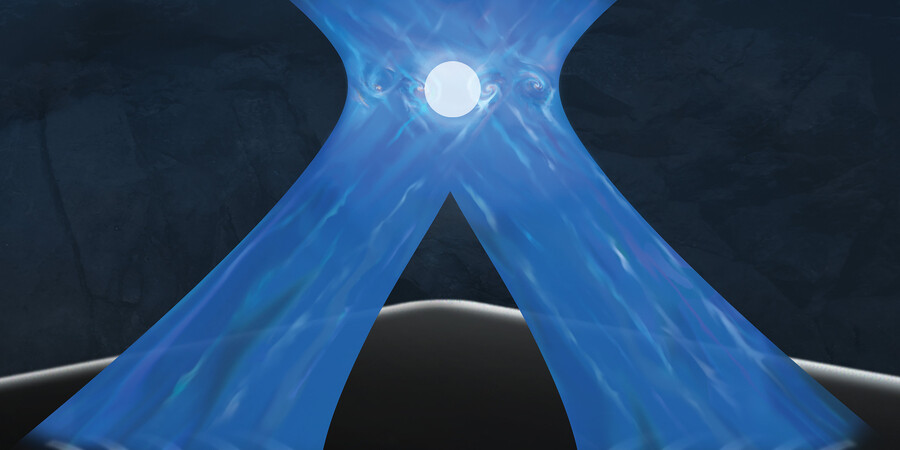
Efficient cooling method could enable chip-based trapped-ion quantum computers
Adam Zewe | MIT News
New technique could improve the scalability of trapped-ion quantum computers, an essential step toward making them practically useful.


