

February 5, 2025
Superconducting materials are similar to the carpool lane in a congested interstate. Like commuters who ride together, electrons that pair up can bypass the regular traffic, moving through the material with zero friction.
But just as with carpools, how easily electron pairs can flow depends on a number of conditions, including the density of pairs that are moving through the material. This “superfluid stiffness,” or the ease with which a current of electron pairs can flow, is a key measure of a material’s superconductivity.
Physicists at MIT and Harvard University have now directly measured superfluid stiffness for the first time in “magic-angle” graphene — materials that are made from two or more atomically thin sheets of graphene twisted with respect to each other at just the right angle to enable a host of exceptional properties, including unconventional superconductivity.
Complete article from MIT News.
Explore
Discovery helps explain why solid-state batteries often fail
Zach Winn | MIT News
New research could help prevent the formation of tiny seeds of lithium metal within the electrolyte, enabling batteries that charge faster and last longer.
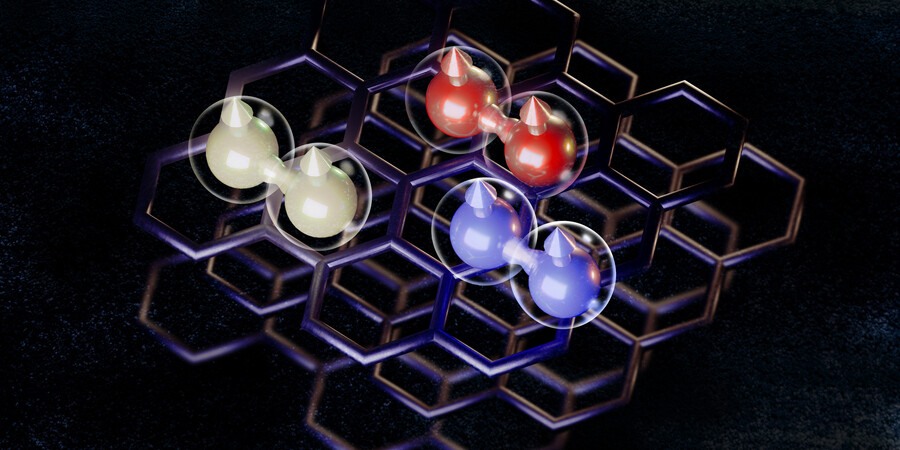
Graphene can hold multiple states of superconductivity, a new study finds
Jennifer Chu | MIT News
What’s more, the superconducting states get stronger under conditions expected to kill them.

Improving the performance of high-power electronics
Adam Zewe | MIT News
By using a thin layer of diamond to manage excessive heat, researchers can boost the speed and energy-efficiency of next-generation wireless devices.


