
Tuesday, April 5, 2022 | 2pm – 3pm ET, Chipman Room, 6-104
Speaker: Deji Akinwande, University of Texas at Austin
Please use this link for more information on the Materials Science and Engineering Seminar Series.
Abstract: This talk will present our latest research adventures on 2D nanomaterials towards greater scientific understanding and advanced engineering applications. In particular, the talk will highlight our work on flexible electronics, zero-power devices, single-atom monolayer memory, non-volatile RF/5G/6G switches, and wearable tattoo sensors for mobile health. Non-volatile memory devices based on 2D materials are an application of defects and is a rapidly advancing field with rich physics that can be attributed to metal adsorption into vacancies. The memory devices can be used for energy-efficient neuromorphic computing and operate as switches up to 500GHz. Likewise, from a practical point, electronic tattoos based on graphene have ushered a new material platform that has highly desirable practical attributes including optical transparency, mechanical imperceptibility, and is the thinnest conductive electrode sensor that can be integrated on skin for physiological measurements including blood pressure monitoring with Class A performance. Much of these research achievements have been published in leading journals.
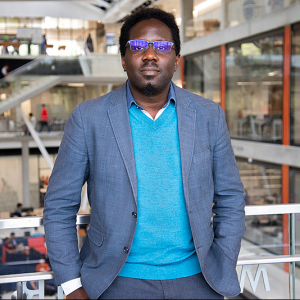 Speaker Bio: Deji Akinwande is a professor and holds the Temple Foundation Endowed Professorship No. 1 at The University of Texas at Austin Department of Electrical and Computer Engineering. His research focuses on 2D materials and nanotechnology, pioneering device innovations from lab towards applications. He received the PhD degree in Electrical Engineering from Stanford University in 2009, where he conducted research on the material science, device physics, and circuit applications of carbon nanotubes and graphene. His Master’s research in Applied Physics at Case Western Reserve University pioneered the design and development of near-field microwave probe tips for nondestructive imaging and studies of materials.
Explore
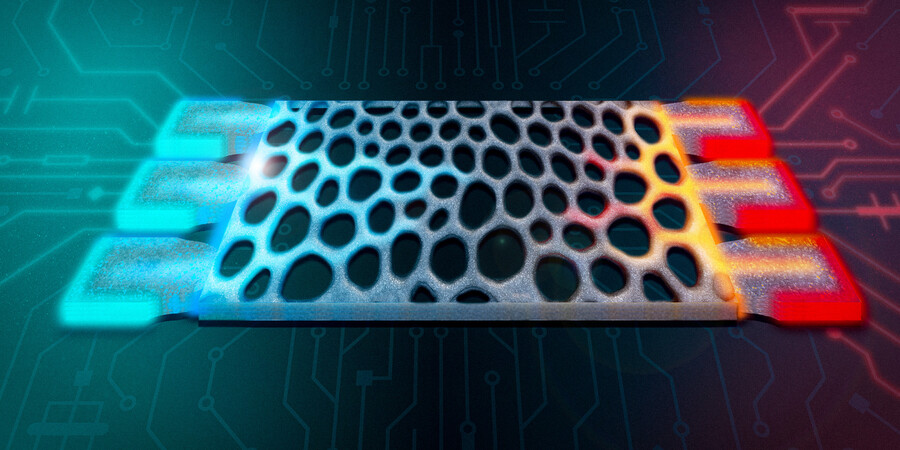
MIT Engineers Design Structures that Compute with Heat
Adam Zewe | MIT News
By leveraging excess heat instead of electricity, microscopic silicon structures could enable more energy-efficient thermal sensing and signal processing.
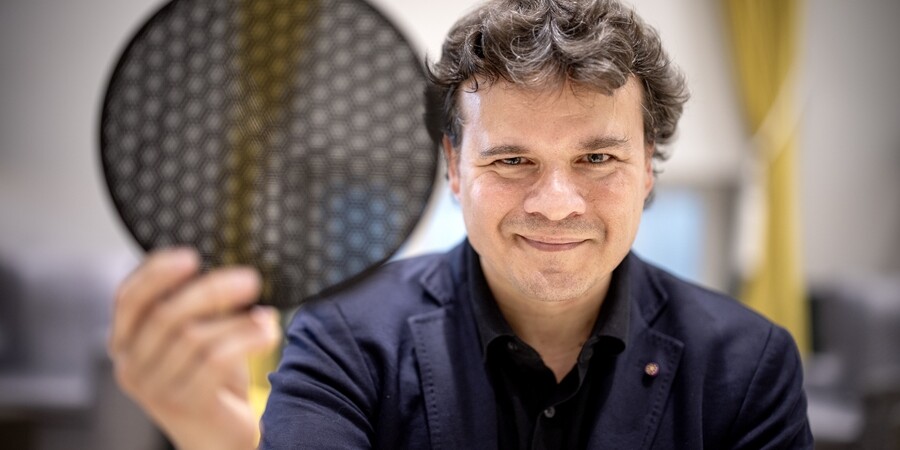
Pablo Jarillo-Herrero wins BBVA Foundation Frontiers of Knowledge Award
MIT physicist shares award for influential work on “magic-angle” graphene.
Materials Research Laboratory

What Makes a Good Proton Conductor?
Zach Winn | MIT News
MIT researchers found a way to predict how efficiently materials can transport protons in clean energy devices and other advanced technologies.