

February 20, 2025
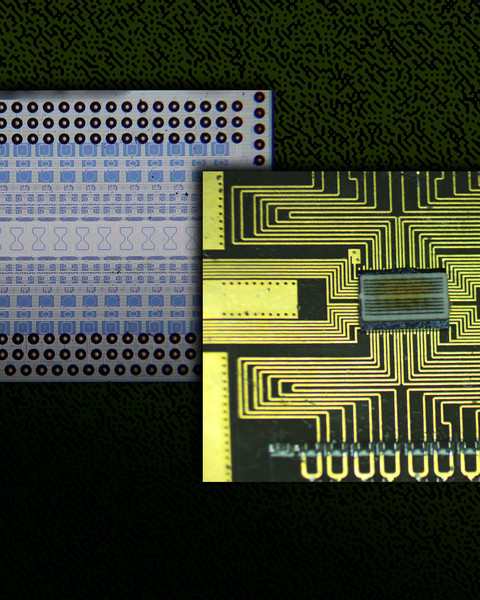
The use of terahertz waves, which have shorter wavelengths and higher frequencies than radio waves, could enable faster data transmission, more precise medical imaging, and higher-resolution radar.
But effectively generating terahertz waves using a semiconductor chip, which is essential for incorporation into electronic devices, is notoriously difficult.
Many current techniques can’t generate waves with enough radiating power for useful applications unless they utilize bulky and expensive silicon lenses. Higher radiating power allows terahertz signals to travel farther. Such lenses, which are often larger than the chip itself, make it hard to integrate the terahertz source into an electronic device.
To overcome these limitations, MIT researchers developed a terahertz amplifier-multiplier system that achieves higher radiating power than existing devices without the need for silicon lenses.
Complete article from MIT News.
Explore
Graphene can hold multiple states of superconductivity, a new study finds
Jennifer Chu | MIT News
What’s more, the superconducting states get stronger under conditions expected to kill them.
Improving the reliability of circuits for quantum computers
Adam Zewe | MIT News
A new technique helps scientists measure a phenomenon that can cause quantum circuits to perform differently than expected, increasing the error in computations.
Powerful shrinking technique could enable devices that compute with light
Anne Trafton | MIT News
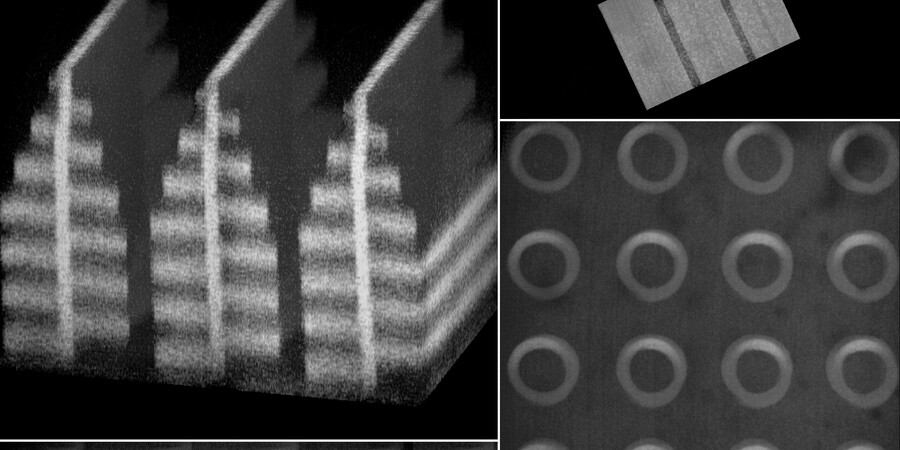
MIT researchers created tiny 3D photonic devices with features small enough to channel visible light.


