
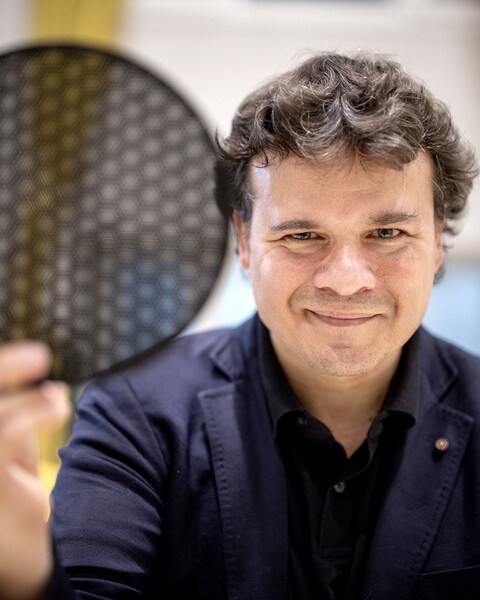
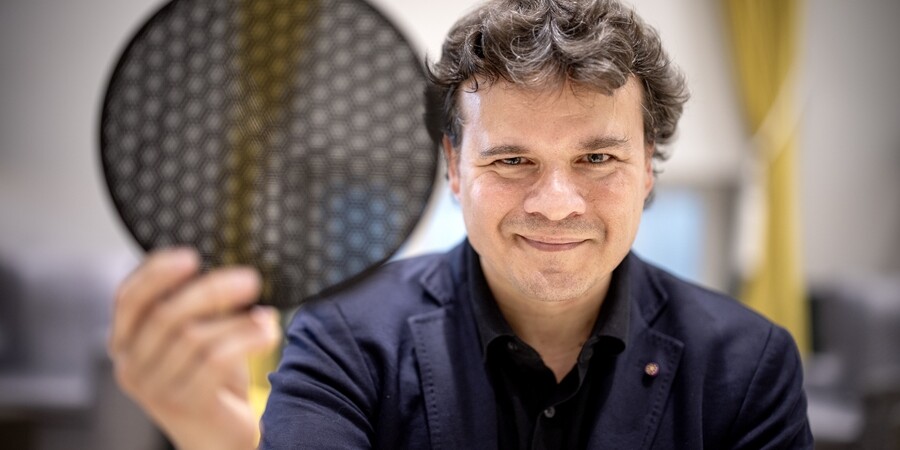
Pablo Jarillo-Herrero wins BBVA Foundation Frontiers of Knowledge Award
MIT physicist shares award for influential work on “magic-angle” graphene.
Materials Research Laboratory

What Makes a Good Proton Conductor?
Zach Winn | MIT News
MIT researchers found a way to predict how efficiently materials can transport protons in clean energy devices and other advanced technologies.

New Materials Could Boost the Energy Efficiency of Microelectronics
Adam Zewe | MIT News
By stacking multiple active components based on new materials on the back end of a computer chip, this new approach reduces the amount of energy wasted during computation.

MIT Physicists Observe Key Evidence of Unconventional Superconductivity in Magic-angle Graphene
The findings could open a route to new forms of higher-temperature superconductors.
Jennifer Chu | MIT News

A “seating chart” for Atoms Helps Locate Their Positions in Materials
Jennifer Chu | MIT News
The DIGIT imaging tool could enable the design of quantum devices and shed light on atomic-scale processes in cells and tissues.
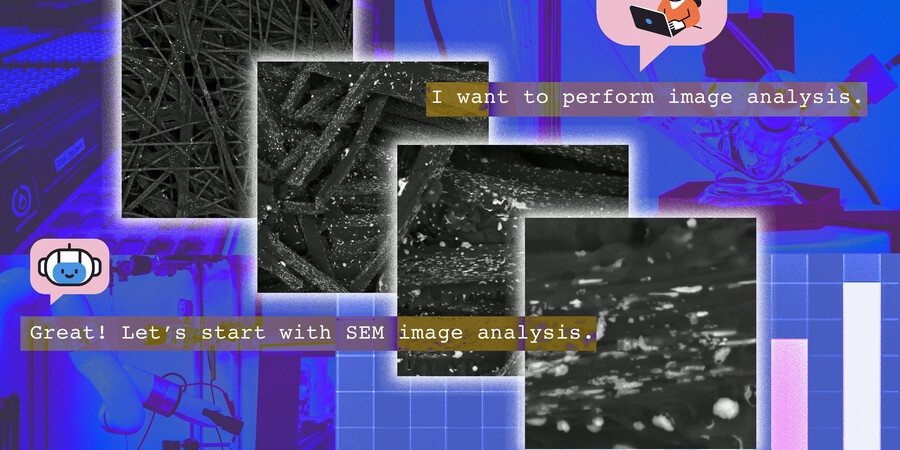
AI System Learns from Many Types of Scientific Information and Runs Experiments to Discover New Materials
Zach Winn | MIT News
The new “CRESt” platform could help find solutions to real-world energy problems that have plagued the materials science and engineering community for decades.
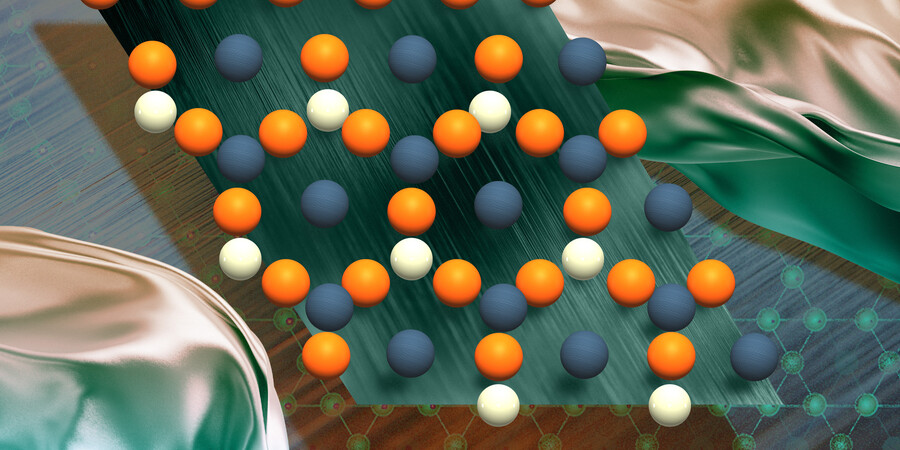
New Tool Makes Generative AI Models More Likely to Create Breakthrough Materials
Zach Winn | MIT News
With SCIGEN, researchers can steer AI models to create materials with exotic properties for applications like quantum computing.

MIT Physicists Discover a New Type of Superconductor that’s also a Magnet
Jennifer Chu | MIT News
The “one-of-a-kind” phenomenon was observed in ordinary graphite.

III-Nitride Ferroelectrics for Integrated Low-Power and Extreme-Environment Memory
Monday, May 5, 2025 | 4:00 - 5:00pm ET
Hybrid
Zoom & MIT Campus
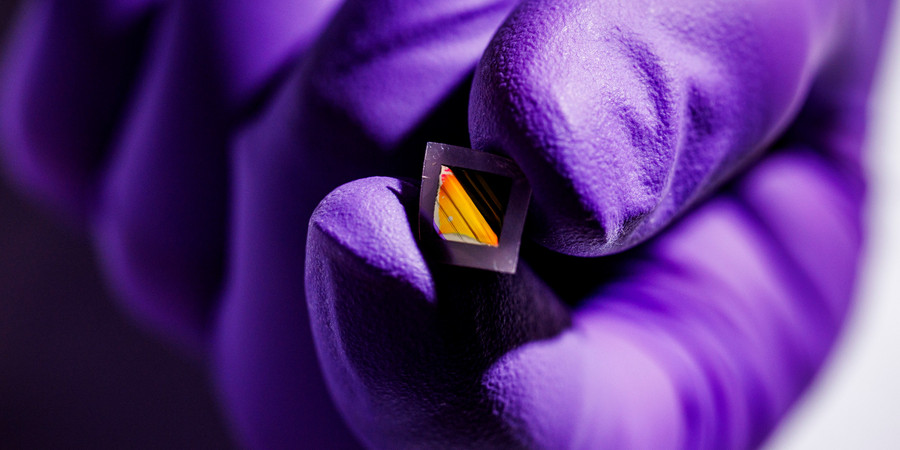
New Electronic “skin” could Enable Lightweight Night-vision Glasses
Jennifer Chu | MIT News
MIT engineers developed ultrathin electronic films that sense heat and other signals, and could reduce the bulk of conventional goggles and scopes.